
 English


Views: 0 Author: Site Editor Publish Time: 2026-03-10 Origin: Site


Ever tried wrapping a wine bottle neatly? It looks easy until the paper folds awkwardly.A wine bottle has a tall shape. That makes clean wrapping harder than expected.In this guide, you will learn creative and elegant ways to wrap a wine bottle. We will cover simple steps, smart materials, and polished finishing ideas.
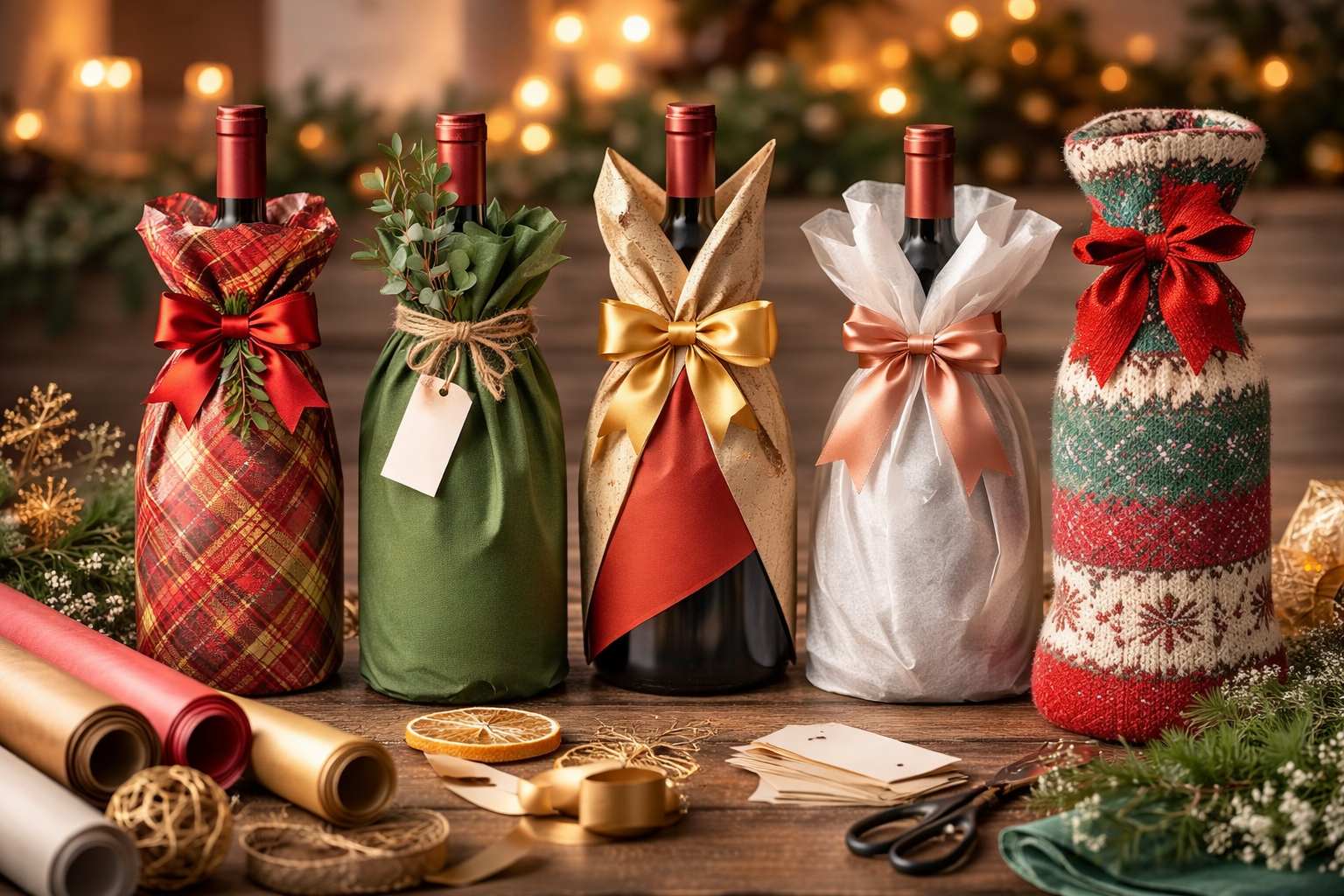
Mastering how to wrap a wine bottle begins with understanding the structural principles of wrapping cylindrical objects. The key factors include paper flexibility, proper measurement, base folding technique, and clean finishing details. Below are proven methods that work across occasions and bottle types.
This is the most traditional and versatile approach, ideal for formal gifting and holiday occasions. Start by cutting wrapping paper so it extends approximately two inches below the base and eight inches above the neck of the wine bottle. Place the wine bottle horizontally along the long edge of the paper and wrap it snugly to ensure there is no slack. Secure the seam using double-sided tape to maintain a seamless appearance. At the base, fold the excess paper inward in small triangular segments until a flat circle forms, then secure discreetly with tape to create a stable bottom. At the top, accordion-fold the remaining paper and secure the center with tape before tying a ribbon just below the fold to conceal the seam and add structure.
This method creates a clean silhouette and works especially well when using glossy wrapping paper that adapts easily to curved surfaces.
The triangle-fold technique adds dimension and boutique-style refinement to your wine bottle presentation. Begin by folding your wrapping paper diagonally into a large triangle, ensuring symmetry. Accordion-fold one side halfway toward the center, creating layered pleats that will later form decorative texture. Place the wine bottle along the straight edge of the triangle and wrap tightly, keeping folds aligned. Secure the seam with double-sided tape and finish with a ribbon and gift tag positioned just beneath the neck. When using double-sided paper, allow a slight edge of the reverse pattern to show, adding contrast and visual depth.
This method is particularly effective for holiday events and upscale hostess gifts because it combines structure and artistry.
If you prefer a lighter, more elegant aesthetic, tissue paper wrapping offers a refined alternative. Layer two sheets of tissue paper for durability and opacity, then place the wine bottle diagonally across the paper. Roll the bottle slowly while folding the base inward to create a clean foundation. Secure the seam discreetly with tape and tie a ribbon around the neck to gather the paper neatly. This technique works well for last-minute gatherings because it requires minimal measuring while still delivering an elevated presentation.
Sustainable gifting continues to grow in popularity, and fabric wrapping adds both visual charm and practical value. Use an 18×28-inch fabric square or decorative dish towel and place the wine bottle at the center. Gather the corners upward around the bottle and secure them at the neck using ribbon, twine, or decorative cord. This approach not only eliminates paper waste but also doubles as an additional gift, making it ideal for eco-conscious recipients.
For a sculptural and decorative look, leave additional paper height at the top and wrap the wine bottle securely. Instead of trimming excess paper, accordion-fold the top in evenly spaced segments and secure the center with tape. Tie a ribbon below the folded section to emphasize the fan shape. Spread the folds slightly to create fullness and balance. This style works beautifully for display tables and celebratory occasions where presentation matters as much as the gift itself.
The materials you select directly influence both ease of wrapping and final appearance. Thin glossy wrapping paper tends to be more forgiving around curved surfaces, while double-sided paper enhances dimension and sophistication. Kraft paper delivers a rustic aesthetic but may require more precision because it is less flexible.
Tape selection also matters. Double-sided tape produces the cleanest finish because it hides seams completely, while invisible tape offers durability without drawing attention. Avoid placing tape directly on the wine bottle label to preserve branding and visual appeal.
Ribbon choice further enhances presentation. Grosgrain ribbon provides structure and holds shape well, while satin ribbon creates a smooth, elegant finish suitable for weddings or formal gatherings. Decorative additions such as dried flowers, ornaments, or personalized tags can elevate even simple wrapping into a premium-looking gift.
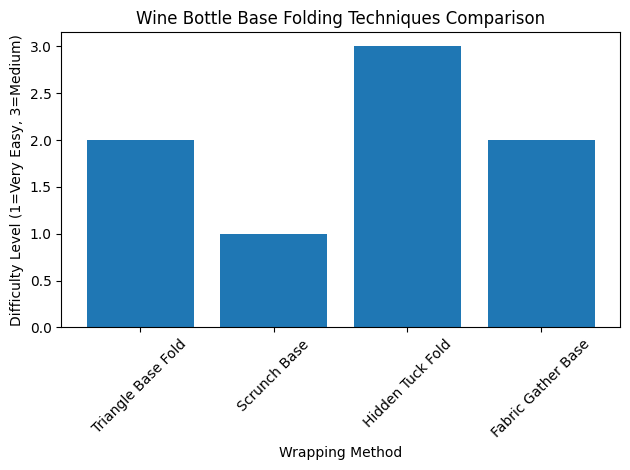
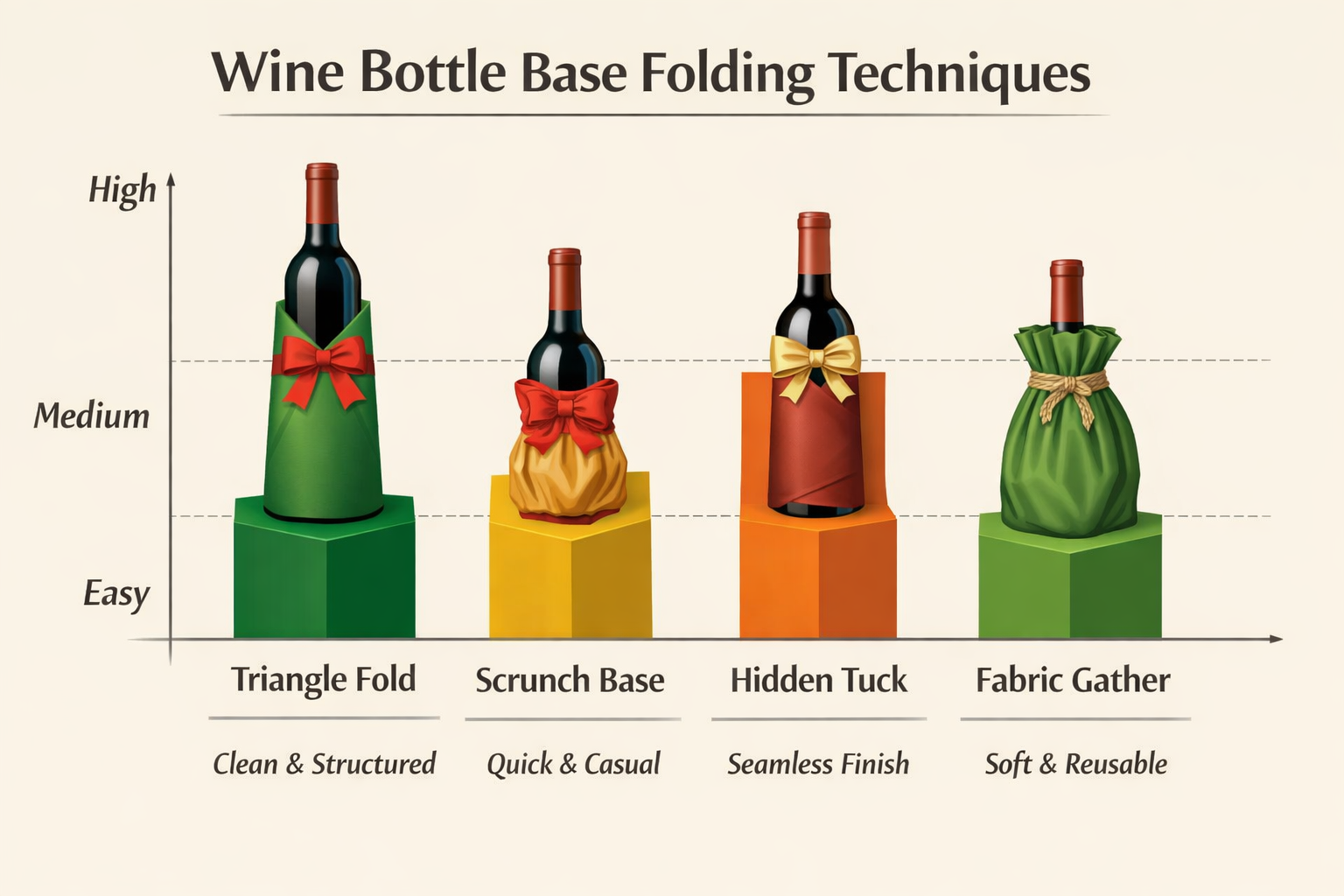
The base fold is often the most challenging part of wrapping a wine bottle because it determines stability and polish. The table below compares common techniques:
Folding Style | Difficulty | Appearance | Best Use |
Triangle Base Fold | Easy | Clean & structured | Classic gifts |
Scrunch Base | Very Easy | Casual | Quick wrapping |
Hidden Tuck Fold | Medium | Seamless finish | Premium gifting |
Fabric Gather Base | Easy | Soft & reusable | Sustainable gifts |
Triangle folds are the most balanced option for beginners because they combine simplicity and structure, while hidden tuck folds create a seamless base ideal for upscale presentations.
Bottle size significantly influences measurement and folding strategy. A standard 750ml wine bottle typically requires wrapping paper that extends eight inches above the neck and two inches below the base, whereas champagne bottles require additional width because of their broader base and thicker glass. Magnum bottles demand even larger sheets and reinforced base folds to maintain structural stability, while mini bottles benefit from proportionally smaller sheets to avoid bulky excess paper.
Bottle Type | Wrapping Adjustment Needed | Extra Support Required |
Standard 750ml | Standard measurement | Minimal |
Champagne | Wider paper sheet | Reinforced base folds |
Magnum | Extended width & height | Strong base structure |
Mini/Half Bottle | Smaller sheet | Tight folds |
Understanding these variations prevents common mistakes such as insufficient paper coverage or unstable bases.
Many wrapping issues arise from using paper that is too stiff, cutting sheets too short, or applying excessive tape. Thick kraft paper can tear around curved edges if not folded carefully. Insufficient top height prevents clean fan folds, while too much tape reduces elegance and draws attention to seams. Another frequent mistake involves ignoring bottle size differences, which leads to uneven folds or unstable bases.
To achieve a refined look, always position seams on the back side of the wine bottle so the front appears seamless. Avoid taping directly over labels, especially for premium wines where branding contributes to visual impact. Use double-sided paper when possible to create subtle contrast layers, and match ribbon color to the wine style for visual harmony—deep tones complement red wines, while lighter shades suit white wines.
Retailers and event planners can enhance perceived value by offering reusable wrapping options or premium paper upgrades at checkout, which adds convenience and elevates customer experience.
Reusable wrapping techniques are increasingly popular because they reduce waste while adding charm. Fabric wraps inspired by traditional Japanese furoshiki techniques offer elegance and practicality. Recycled paper provides minimalist appeal, and decorative towels combine presentation with functionality. These approaches allow the wine bottle to feel both stylish and responsible.
Learning how to wrap a wine bottle transforms a simple gift into a thoughtful and visually striking presentation, especially when the bottle itself is crafted by a trusted supplier such as HUAYUE GLASS LIMITED, known for producing high-quality glass wine bottles with refined shapes and balanced proportions. Whether you choose structured wrapping paper, artistic triangle folds, elegant tissue wraps, or sustainable fabric techniques, the key lies in accurate measurement, smooth base folds, hidden seams, and carefully balanced finishing details that complement the bottle’s design. With practice and close attention to proportion, any wine bottle—particularly one manufactured with precision and durability by HUAYUE GLASS LIMITED—can appear polished, intentional, and memorable before it is opened, ensuring that your gift stands out confidently at any gathering.
A: The easiest way to wrap a wine bottle is the classic paper method with triangle base folds and ribbon at the neck.
A: You can wrap a wine bottle using fabric, a dish towel, kraft paper, or even newspaper tied with twine.
A: A wine bottle has a tall cylindrical shape, which makes base folding and smooth seams harder to manage.
A: For a standard wine bottle, leave about 2 inches below the base and 8 inches above the neck.
A: Fabric can be better because it is reusable, sustainable, and adds extra value to the wine bottle gift.


