
 English


Views: 0 Author: Site Editor Publish Time: 2026-11-09 Origin: Site


While most people assume glass is naturally clear, the raw materials fed into the furnace actually dictate its final appearance. As the foundational ingredient—often making up over 70 percent of a standard batch—premium quartz sand serves as the ultimate deciding factor in a product's visual appeal. Imagine pouring a top-shelf whiskey into a newly manufactured container. You expect brilliance. Instead, you find the glass casts a dull, greenish shadow over the amber liquid. Manufacturers frequently fight these stubborn green tints. They can instantly ruin the feel of premium packaging, especially for high-end spirits and luxury cosmetics.
A noticeable shift is currently reshaping the luxury packaging sector. Global beverage and cosmetic brands are moving away from heavy frosting and opaque coatings. Instead, they favor minimalist, ultra-clear designs that showcase the raw liquid inside. This demand for absolute transparency places unprecedented pressure on material supply chains. Glassmakers are now forced to secure ultra-low-iron mineral deposits to meet these stringent optical standards. Consequently, high-grade silica is no longer just a raw material; it is a critical commercial asset that defines brand positioning. In this comprehensive guide, we explore exactly why this happens. We will break down how trace minerals influence the final melt and why choosing the right raw materials drastically improves overall quality.
Purity Dictates Clarity: High-purity silica is absolutely essential for producing perfectly clear, colorless containers.
Iron Ruins the Melt: Even microscopic amounts of iron oxide in the raw material will result in an unwanted green or blue tint.
Impure Sand Wastes Energy: Sand laden with impurities degrades color and requires significantly more thermal energy to melt.
Premium Packaging Demands Extra Flint: High-end products rely on ultra-clear glass made from rigorously tested, highly refined minerals.
Geological Origin Matters: The geographical source of the sand deposit fundamentally changes its suitability for commercial manufacturing.
To truly grasp how raw materials influence the final product, we must define the foundational ingredient of all commercial glass. Chemically known as silicon dioxide, this mineral acts as the primary network former in the manufacturing process. It forms the structural backbone of the material. Therefore, the chemical composition of this sand directly dictates the physical and optical properties of the finished container.
Industrial-grade sand used in this sector is not a generic commodity. It is a highly refined raw material. For commercial clear glass, the batch must typically achieve a silica purity level of 99 percent or higher. Why is this high concentration critical? First, it ensures the structural durability and tensile strength of the container. Furthermore, high purity provides excellent thermal resistance. This allows the glass to withstand significant temperature fluctuations on the filling line without fracturing. Ultimately, a pure silica network allows for optimal light transmission, which is the baseline requirement for true transparency.
A common misconception among consumers is that any sand from a local beach can be melted into glass. In reality, standard construction sand or river sand contains a chaotic mixture of contaminants. These everyday sands are heavily mixed with clay, feldspar, organic matter, and heavy metals. If introduced into an industrial furnace, these contaminants cause severe structural defects. You would experience extreme discoloration and bubbling, resulting in a dark, opaque slag rather than a usable container.
The visual spectrum of a finished bottle is a direct translation of the chemical makeup of the sand used in the batch. When the raw materials melt, any trace minerals present in the crystalline structure dissolve into the glass matrix. These transition metals absorb specific wavelengths of visible light. This absorption causes the human eye to perceive distinct colors. Therefore, achieving colorless glass making is not about adding a clear dye. It is entirely about the meticulous absence of light-absorbing impurities.
Across the manufacturing industry, iron is widely considered the primary enemy of clarity. It naturally occurs in almost all geological deposits, usually in the form of iron oxide. The tolerance for this element in clear production is exceptionally low. Specifically, just 0.1 percent iron oxide in a batch is enough to turn the resulting glass visibly green.
The specific tint produced depends heavily on the oxidation state of the iron during the melting process. Ferrous iron absorbs red and infrared light, resulting in a distinct blue or blue-green tint. It also significantly reduces the overall light transmission of the glass. In contrast, ferric iron absorbs ultraviolet and lower-wavelength visible light, producing a yellow or yellowish-green tint.
While iron remains the most common contaminant, raw deposits harbor other trace minerals that drastically alter the final product. Chromium will impart a deep, dark green color even in microscopic parts-per-million concentrations. Titanium impurities tend to create a yellowish or brown hue, which dulls the brilliance of the glass. Cobalt produces an intense blue color. If a manufacturer intends to produce crystal-clear packaging, engineers must rigorously test the raw materials to ensure these specific elements are virtually non-existent.
For manufacturers aiming to produce clear packaging, fighting a persistent green tint is a common and costly pain point. When low-quality raw materials are utilized, the resulting green glow degrades the aesthetic appeal of the product. Furthermore, it introduces hidden operational costs that severely impact the bottom line.
The financial impact of impure sand begins deep within the melting furnace. Darker, tinted glass absorbs heat differently than pure, clear glass. The iron content and other impurities in the melt absorb infrared radiation. Consequently, the heat from the furnace burners is absorbed primarily by the top layer of the molten glass. This prevents thermal energy from penetrating to the bottom of the tank.
This uneven heat distribution creates a colder, sluggish zone at the bottom of the furnace. To compensate and ensure the entire batch melts uniformly, operators are forced to increase the overall furnace temperature or extend the melting time. Both solutions require a massive increase in fuel consumption. This directly translates to higher energy costs and a larger carbon footprint.
When manufacturers are constrained by local supply chains and must use sand with higher impurity levels, they often attempt to fix the green tint chemically. This is achieved by adding decolorizing agents to the batch. Chemical decolorizers, such as selenium, erbium, manganese, or cobalt, work by introducing complementary colors into the glass. For example, selenium adds a slight pinkish hue, which visually cancels out the green tint caused by iron.
While this makes the glass appear colorless to the naked eye, it actually reduces the total light transmission. The result is a slightly grayish or dull appearance. In addition, these rare-earth and transition metal decolorizers are expensive. Relying on them increases raw material costs and complicates the production process, as the dosage must be perfectly calibrated to avoid over-tinting the batch.
A frequent question among material enthusiasts is whether naturally colored sands—such as the famous red sands of the Australian outback or the brown sands of certain African deserts—can be used for production. From a purely chemical standpoint, any sand with a high concentration of silica can be melted into a glass-like state. However, the results fall far short of commercial grade.
The vibrant red, orange, and brown colors found in desert environments are caused by heavy coatings of iron oxide and other clay minerals on the surface of the silica grains. If you melt naturally red sand, the extremely high iron levels completely dominate the optical properties of the melt. These iron levels often exceed 2 to 5 percent.
The resulting material would not be transparent. Instead, it would cool into an opaque, dark brown, or completely black glass. This type of heavily tinted material might be suitable for niche applications like UV-blocking amber beer bottles or industrial fiberglass. However, it is entirely unsuitable for clear architectural windows, mirrors, or premium packaging.
In the packaging industry, the clarity of the container is a direct reflection of the brand quality. This is particularly true in the food, beverage, and cosmetics sectors, where the visual presentation of the product is a critical component of consumer decision-making.
The industry categorizes clear glass into different grades based on its transparency and brilliance. Standard flint glass is the most common. It is generally clear but may exhibit a very faint green or grey tint when viewed from the edge. Standard flint can tolerate sand with slight impurities.
In contrast, extra flint glass represents the pinnacle of transparency. It is super premium, highly brilliant, and completely colorless. To achieve this level of optical perfection, manufacturers must source raw materials with the absolute lowest iron levels available.
Feature | Standard Flint Glass | Extra Flint Glass |
|---|---|---|
Silica Purity Requirement | Greater than 98.5 percent | Greater than 99.5 percent |
Maximum Iron Tolerance | Approximately 0.04 percent | Less than 0.015 percent |
Visual Appearance | Clear, slight green edge tint | Crystal clear, brilliant sparkle |
Typical Application | Everyday food jars, basic bottles | Premium spirits, luxury cosmetics |
Decolorizer Usage | Moderate to High | Minimal to None |
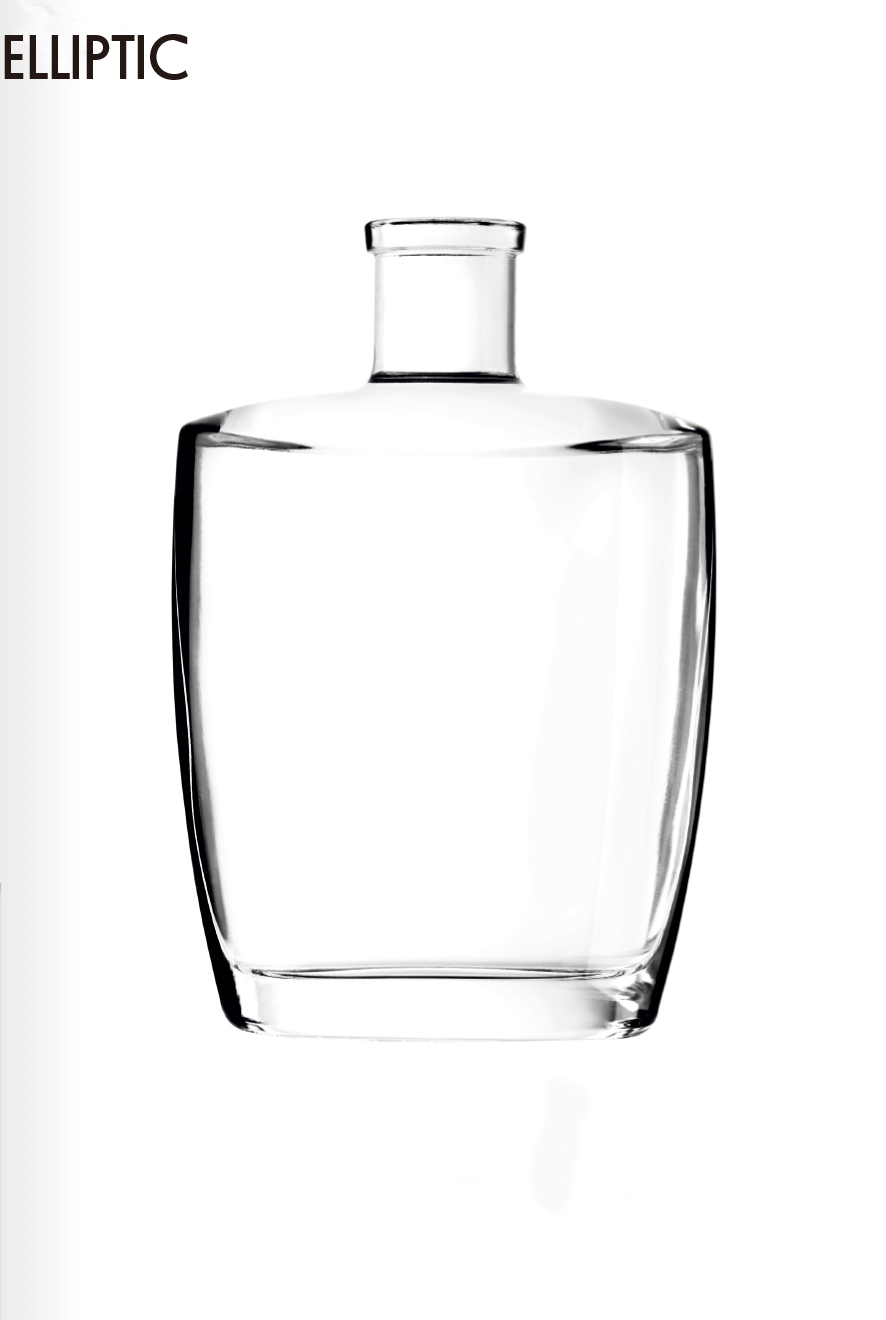
Let us look at a practical engineering example. Consider a premium 700ml or 750ml spirit bottle designed for top-shelf liquors, such as the classic ELLIPTIC design. These containers often feature a heavy glass base to convey luxury and stability. If the sand used contained even a fraction of a percent of excess iron, the thick glass at the base would magnify the green tint. This instantly ruins the aesthetic. By utilizing extra flint glass derived from ultra-pure silica, manufacturers achieve high transparency and a smooth, flawless finish. This level of craftsmanship ensures the packaging showcases the liquid inside without any visual distortion or unwanted color interference.
Given the profound impact that raw materials have on the final product, sourcing the right sand is one of the most critical supply chain decisions a manufacturer will make. Engineers and procurement teams must evaluate potential suppliers against strict technical criteria.
First, inspect the grain size distribution. If the sand grains are too large, they will not melt completely. This leaves solid inclusions known as stones in the glass. If the grains are too fine, they create dust in the furnace and trap gas bubbles known as seeds. Second, demand guaranteed purity levels. Premium applications typically require a minimum of 99.5 percent silicon dioxide. Finally, verify certified low iron levels backed by regular laboratory testing. This ensures the sand will not compromise the desired bottle color.
High-quality sand rarely comes out of the ground ready for the furnace. It undergoes an extensive beneficiation and treatment process at the quarry. Raw sand is first washed and subjected to attrition scrubbing to remove surface clays and organic matter.
To address the critical issue of iron, processors run the sand through high-intensity magnetic separators. These pull out iron-bearing minerals. In some cases, froth flotation separates out heavy minerals and feldspar. Only after this rigorous purification process does the material meet the exacting standards required to produce flawless, colorless containers.
Ultimately, the sand used in the furnace is not just a bulk filler. It is the active determinant of the final glass clarity, quality, and brilliance. High silica purity prevents unwanted green tints. Meticulously managing iron levels saves manufacturers significant money on energy costs and eliminates the need for expensive chemical decolorizers. By prioritizing premium raw materials, brands can ensure their packaging reflects the true value of the product inside. If you are looking to elevate your product presentation, partnering with a reliable manufacturer is essential. Explore the high-transparency, extra flint glass solutions available at hy-glasswork.com to achieve the perfect bottle color and deliver a superior consumer experience.
Yes, the natural color of the raw sand strongly indicates its chemical composition. Sand with a reddish, brownish, or yellowish hue typically contains high levels of iron oxide and other trace minerals. If used in production without extensive chemical treatment and beneficiation, this impure sand inevitably results in a prominent green, blue, or brown tint in the finished product. This makes it entirely unsuitable for clear packaging applications.
The green tint visible on the edges of lower-cost products is caused by residual iron oxide. In standard manufacturing, companies often use lower-grade sand to reduce raw material costs. Because the edges and the base of a container are thicker, ambient light travels through more material. This amplifies the visibility of the iron impurities, making the green coloration much more pronounced than on the thinner side walls.
For the production of perfectly clear, extra flint glass, manufacturers require raw materials with an exceptionally high chemical standard. The ideal purity is 99.5 percent or higher. Concurrently, iron levels must be strictly limited to less than 0.015 percent to 0.030 percent, depending on the specific optical requirements. Any purity levels below this threshold introduce visible color distortion and reduce overall light transmission.
Manufacturers can attempt to mask the green tint by introducing complementary chemical colorants into the batch. Elements such as selenium, cobalt, or manganese create a faint pink or blue hue that visually cancels out the green. However, this method reduces overall light transmission, resulting in a slightly grayish, duller appearance. The only scientifically sound method for achieving brilliant, flawless color is to start with highly purified sand.
While sand acts as the foundational network former, it cannot be melted efficiently on its own. The process requires soda ash to act as a flux. This significantly lowers the melting temperature of the silica to manageable industrial levels. Additionally, limestone is added as a stabilizer to ensure the finished product is chemically durable and does not dissolve when exposed to water or environmental moisture.
Engineers and geologists utilize X-ray fluorescence spectrometry to map the exact mineral composition of a sand batch. This advanced testing method detects trace elements like iron, chromium, and titanium down to parts-per-million levels. Regular sampling ensures that every truckload of raw material meets the strict chemical tolerances required for extra flint production.
High-quality clear glass made from pure silica is chemically inert and will not yellow or degrade over time under normal environmental conditions. However, if the manufacturer used excessive amounts of certain chemical decolorizers like manganese to mask impure sand, prolonged exposure to ultraviolet sunlight can cause a process called solarization. This chemical reaction may eventually give the glass a faint purple or yellowish hue.


