
 English


Views: 0 Author: Site Editor Publish Time: 2026-09-23 Origin: Site


Packaging failure during transit directly erodes profit margins for food and beverage manufacturers. When containers shatter in storage or on the road, you lose both the physical product and the packaging investment. Procurement teams face a constant tension between structural integrity and logistical efficiency. You must balance the need for a highly resilient container against the rising freight weights associated with heavier packaging. Maintaining brand aesthetics and visual transparency further complicates this delicate balance. Wall thickness and material consistency serve as the primary variables governing glass packaging durability. Optimizing the specifications for Food Grade Soda Lime Bottles requires a deep technical understanding of stress distribution. You need to account for manufacturing tolerances, thermal dynamics, and complex shipping environments to ensure product safety.
Thickness vs. Transparency Trade-off: Increasing glass thickness improves impact resistance and compressive strength but inherently reduces optical clarity and alters the aesthetic presentation of the product inside.
Consistency Over Pure Thickness: Uneven glass distribution creates structural weak points; a moderately thick bottle with uniform walls is significantly more durable than a thicker bottle with thin spots.
Compressive vs. Tensile Strength: Because glass is a brittle material lacking plastic deformation, it excels under compressive force but fails under tensile stress. Thickness specifications must account for directional forces applied during capping, filling, warehousing, and transit.
Glass behaves entirely differently than plastics or metals under physical stress. Understanding these material properties helps packaging engineers design better containers and troubleshoot line failures. Soda-lime silica glass possesses high hardness but extreme brittleness. It completely lacks the ability to deform plastically. When a PET plastic bottle drops onto a concrete floor, it dents or bends to absorb the impact energy. Glass cannot bend to absorb this kinetic stress. It either holds its structural shape entirely or shatters completely once its physical limits are exceeded.
Glass withstands high compressive loads exceptionally well. Stacking heavy pallets in a warehouse applies massive external force compression to the bottom tier of bottles. A standard glass container easily supports this vertical weight, often handling hundreds of pounds of direct downward force without issue. However, glass remains highly vulnerable to tensile stress. Tensile forces pull the material apart. Bending or stretching forces from internal carbonation pressure cause tensile stress on the sidewalls. Lateral impacts on a high-speed conveyor belt also create localized tensile forces on the glass surface. Most glass failures on the factory floor occur because a specific force exceeded the material's tensile limits, not its compressive limits.
Containers face different types of physical loads throughout the supply chain. Long-term warehouse storage creates static stress. The weight remains constant and predictable over time, distributed evenly across the pallet tiers through corrugated dividers. Automated filling lines and transit vibrations introduce dynamic kinetic energy. Bottles collide on high-speed conveyors at the star wheel indexer. Trucks bounce over uneven roads, sending shockwaves through the pallets. Dynamic loads are highly unpredictable and require specific structural defenses built into the container's geometry.
Increasing wall thickness directly mitigates many types of physical failure. A thicker glass wall absorbs and dissipates kinetic energy more effectively. It prevents localized tensile limits from being breached during sudden impacts. When a bottle hits a guide rail, the thicker wall distributes that force over a larger internal area. However, adding thickness does not solve every structural problem. Excessively thick glass often performs worse under rapid temperature changes. Hot-filling processes or pasteurization subject the container to thermal shock. Thick walls create a temperature gradient between the inner and outer surfaces. The inside expands faster than the outside, creating massive internal stress. This uneven expansion causes thick bottles to fracture under thermal conditions where thinner, uniform bottles would survive.
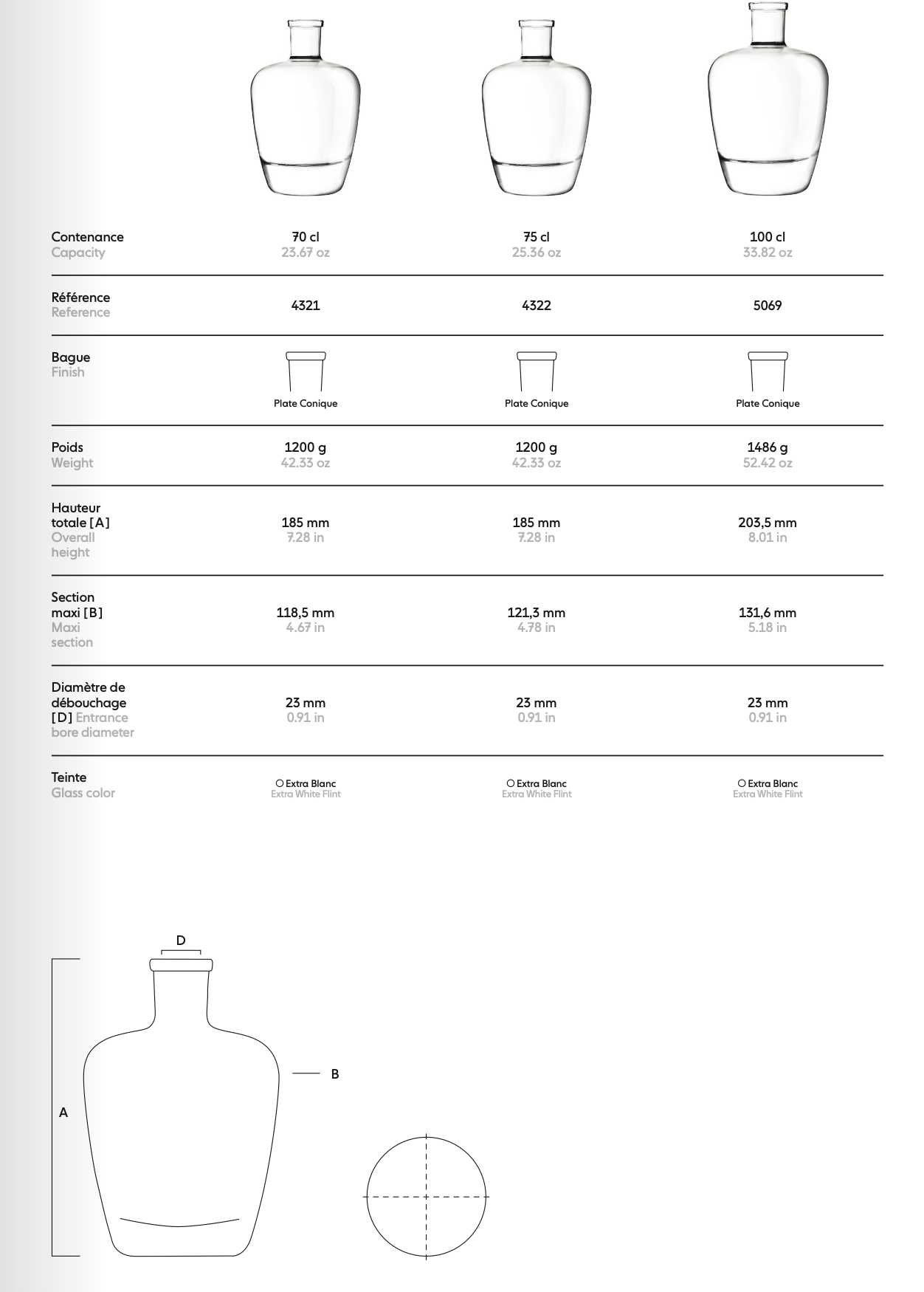
Different food and beverage categories demand entirely different structural baselines. Carbonated beverages require significantly thicker walls to safely contain internal gas pressure. The geometry often includes a punted base to distribute this pressure evenly and prevent the bottom from blowing out. Still liquids, such as spirits or syrups, do not generate internal pressure. They can utilize thinner profiles and flat bases. Food grade soda lime glass provides the ideal balance of cost, chemical inertness, and moldability. These properties allow manufacturers to achieve precise structural standards across diverse product lines without leaching chemicals into the food.
Relying on manual visual checks cannot verify a glass bottle thickness standard. Human eyes cannot detect millimeter variations in wall uniformity, especially on high-speed production lines producing hundreds of bottles per minute. Precise automated methods are mandatory for modern quality control. Manufacturers use ultrasonic thickness gauges to measure walls without destroying the container. These devices bounce sound waves off the inner wall to calculate exact thickness. Physical sectioning remains a reliable destructive testing method. Technicians cut the bottle in half using a diamond saw to measure the cross-section with digital calipers.
Procurement teams must write precise technical specifications. Never rely solely on average bottle weight to determine structural integrity. Two bottles can weigh exactly the same, but one might have dangerously thin sidewalls and a massive, heavy base due to poor glass distribution during molding. Your specification sheet must establish a minimum acceptable wall thickness. It must also define acceptable variance tolerances. Specify exactly how much the thickness can deviate from the target measurement before the batch is rejected.
Beverage Category | Internal Pressure Profile | Recommended Wall Thickness Range | Primary Structural Concern |
|---|---|---|---|
Carbonated Soft Drinks | High (Up to 4.0 volumes CO2) | 2.5mm - 3.5mm | Internal burst strength and tensile stress on the base. |
Hot-Fill Juices & Sauces | Negative (Vacuum upon cooling) | 2.0mm - 3.0mm | Thermal shock resistance and paneling (inward collapse). |
Still Spirits & Liquors | Neutral | 1.8mm - 4.0mm (Varies by brand) | Aesthetic weight and drop impact resistance. |
Syrups & Edible Oils | Neutral | 1.5mm - 2.5mm | Vertical load strength for warehouse stacking. |
Glass Bottle Thickness and Durability
Inconsistent wall thickness stems directly from specific manufacturing variables on the Individual Section (IS) machine. The process begins with a gob of molten glass dropping into a blank mold to form a parison. If the gob temperature fluctuates even slightly, the material viscosity changes. Colder glass does not flow evenly into the mold cavities. Mold design flaws, improper cooling wind application, or dirty molds also contribute to poor distribution. The choice of forming process dictates uniformity. The blow-and-blow method, used for narrow-neck bottles, relies on compressed air to push the glass. This often yields less uniform walls. The press-and-blow method, used for wide-mouth jars, uses a metal plunger to physically press the cavity. This provides far superior control over glass distribution.
Thin spots act as dangerous stress concentrators. When a bottle experiences physical force, the stress naturally funnels toward the weakest point in the structure. A durable glass bottle requires uniform walls to survive automated filling lines. Vertical capping pressure exploits thin shoulders immediately, causing the neck to snap off during the sealing process. Thermal shock from hot-filling targets thin spots near the base or heel. Uneven bottles are highly likely to crack or fracture during transit vibrations. The constant rubbing and bumping on a truck trailer will shatter a container with compromised sidewalls long before it reaches the retail shelf.
Buyers must enforce strict quality assurance protocols. Request specific documentation from your suppliers before accepting a shipment. Verify thickness uniformity using statistical process control (SPC) charts. Demand automated optical inspection data for every production run. High-quality manufacturers use inline camera systems and squeeze testers to scan every single bottle for thin spots, bird swings, and structural defects before they ever reach the packaging pallet.
Increasing container thickness alters the visual presentation of your product. Thicker glass reduces light transmission. It makes the container less transparent and can obscure the color of the liquid inside. Standard soda-lime glass contains trace amounts of iron oxide from the silica sand. As you increase the wall thickness, this iron content becomes more visible, imparting a slight green or blue tint to the glass. This color shift can negatively impact premium brand positioning. Consumers expect crystal-clear transparency for high-end spirits or specialty waters. You must balance structural needs against consumer perception and shelf appeal.
Logistics dictate the financial reality of heavy containers. Thick glass packaging drastically increases pallet weights. Heavier pallets impact warehouse storage density. You may not be able to stack pallets three-high if the combined weight exceeds your racking limits or the crush strength of the bottom corrugated boxes. You must calculate the exact cost implications of bulk bottle shipping. Trucks have strict legal weight limits. Heavy bottles cause trucks to "weigh out" before they "cube out." This means you hit the maximum legal weight limit while the trailer is still half empty. You ship more empty air and fewer actual bottles per truckload. You must compare these increased freight costs against the projected savings from reduced in-transit breakage.
Environmental impact remains a practical consideration for modern supply chains. Shipping heavier glass increases fuel consumption and expands your carbon footprint. Many modern brands pursue lightweighting initiatives. They rely on advanced geometric designs rather than raw thickness to maintain strength. Adding structural ribs, optimizing the shoulder curve, or redesigning the push-up base can provide the necessary impact resistance without adding excess weight to the supply chain. Finite Element Analysis (FEA) software allows engineers to simulate stress and remove glass from low-stress areas while reinforcing high-stress zones.
Sourcing reliable packaging requires rigorous supplier vetting. Look for specific manufacturing capabilities during your facility audits. Ensure their annealing lehrs are perfectly calibrated. The annealing process cools the glass slowly to remove internal stresses generated during molding. Poor annealing guarantees brittle bottles, regardless of wall thickness. Verify they apply both hot-end (tin oxide) and cold-end (polyethylene) coatings. These coatings reduce surface friction, allowing bottles to slide past each other on the conveyor belt without scratching, which preserves the tensile strength of the glass.
Validate that you are purchasing a truly impact resistant glass bottle through standardized physical tests. Require your supplier to provide certification for the following testing standards before approving the mold.
Testing Standard | Primary Purpose | Methodology |
|---|---|---|
Pendulum Impact Testing | Measures dynamic impact resistance and lateral strength. | A steel ball swings on a pendulum, striking the bottle sidewall at increasing velocities until fracture occurs. |
Hydrostatic Pressure Testing | Validates internal burst strength for carbonated products. | Water is pumped into the sealed bottle at increasing pressure levels until the container bursts. |
Thermal Shock Testing | Ensures the bottle survives rapid temperature fluctuations. | The bottle is submerged in a hot water bath, then rapidly transferred to a cold water bath to check for stress fractures. |
Vertical Load Testing | Confirms static stacking and capping compression strength. | A hydraulic press applies downward force on the bottle neck until the structure collapses. |
Mitigate your implementation risks before signing large contracts. Always request pre-production samples from the exact mold you intend to use. Conduct pilot runs on your actual automated filling lines. Test the capping pressure, the labeling machines, and the conveyor transitions. Do not commit to high-volume orders until the physical samples survive your specific operational environment without causing line jams or excessive breakage.
Audit your current breakage rates across your warehouse and transit network to identify specific failure points on the filling line or during transport.
Calculate your acceptable freight-to-breakage ratio to determine the optimal container weight for your logistics budget.
Request detailed thickness tolerance specifications and statistical process control data from prospective glass manufacturers.
Conduct pilot runs on your automated filling lines using pre-production samples to verify capping limits and thermal stability.
Implement a routine sampling program to section and measure incoming bottle shipments against your agreed-upon thickness tolerances.
A: Hot-fill products require a careful balance. Walls must be thick enough to withstand capping pressure and transit impacts. However, excessively thick walls create high thermal mass. This exacerbates thermal shock during rapid heating or cooling, leading to base fractures. A uniform, moderate thickness profile usually performs best for hot-fill applications.
A: Uneven walls create asymmetrical stress distribution under vertical capping loads. When the capping machine applies downward force, the thinner side of the bottle absorbs disproportionate stress. This imbalance quickly leads to micro-fractures in the neck or immediate structural collapse on the filling line.
A: No. While general impact resistance increases with thickness, poor annealing or uneven material distribution in thick glass still results in high failure rates. A moderately thick bottle with perfect uniformity will consistently outlast a very thick bottle that contains thin spots or internal manufacturing stresses.
A: You must subject the containers to standard industry tests. Use pendulum impact testing to measure lateral strength against conveyor collisions. Conduct standardized drop tests to simulate handling failures. Perform vertical load compression tests to ensure the bottles survive warehouse pallet stacking and capping machine pressure.
A: Optimize your palletization strategies to maximize space without exceeding legal truck weight limits. Use high-quality protective dividers to prevent glass-on-glass contact. Respect warehouse stacking limits to prevent bottom-tier crushing. Consolidate order volumes strategically to offset the higher freight weight associated with thicker glass containers.
A: Soda-lime glass offers unmatched cost-efficiency for mass production. It provides complete FDA compliance and exceptional chemical stability, ensuring it never alters the flavor of the food. Furthermore, the material allows for highly customizable thickness profiles and complex geometries during the molding process.


