
 English


Views: 0 Author: Site Editor Publish Time: 2026-03-09 Origin: Site


Think opening a wine bottle is always easy? One wrong move can ruin the moment.A tight cork or old wine bottle adds pressure. You want it clean, safe, and controlled.In this guide, you will learn how to open wine bottle correctly. We cover simple steps, smart tools, and solutions for every situation.
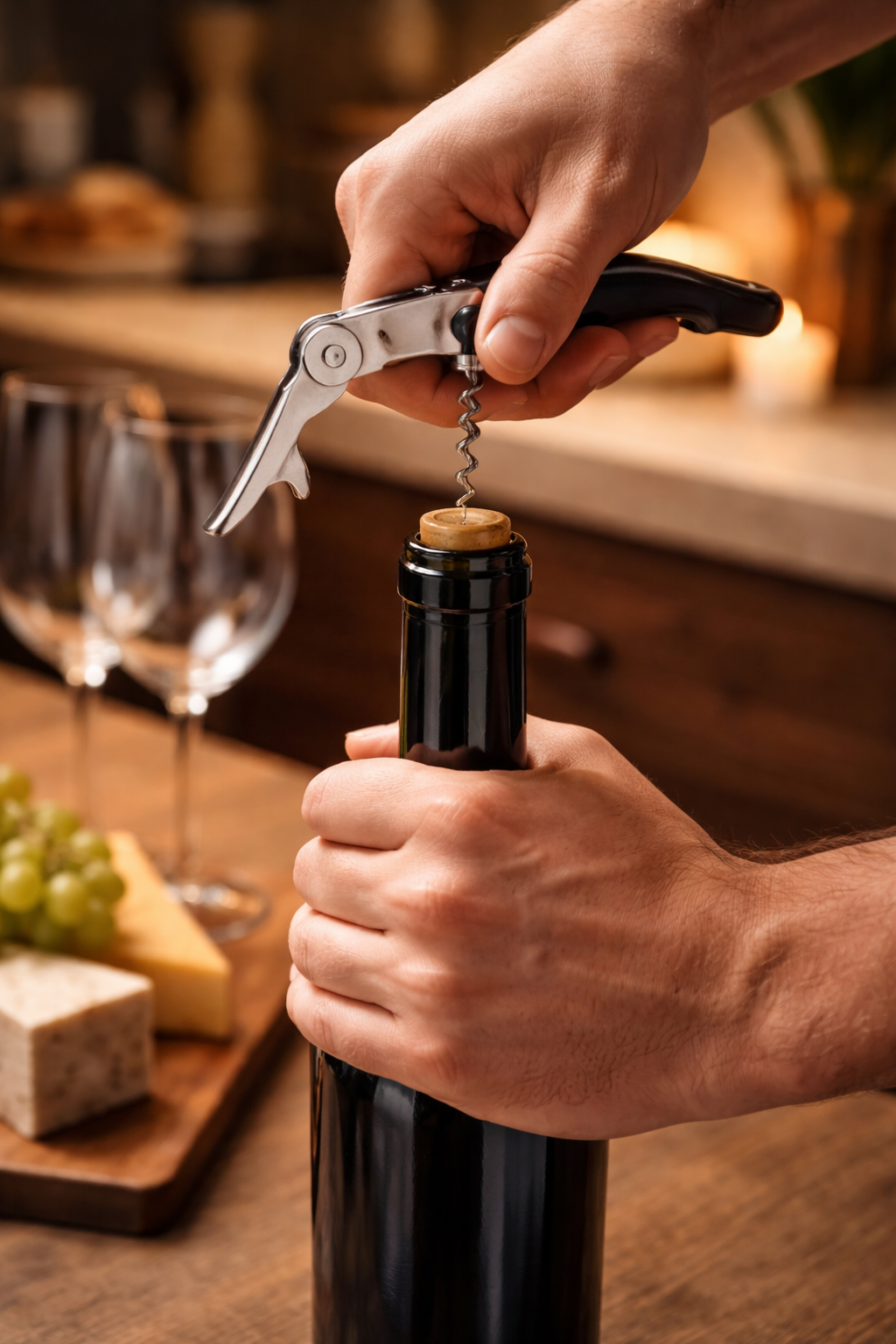
The corkscrew remains the safest and most reliable tool for opening a wine bottle, and mastering it requires patience, alignment, and controlled leverage rather than brute force. When used correctly, it protects the cork structure, prevents cork fragments from falling into the wine bottle, and preserves the wine’s aroma and balance.
Before inserting any tool, preparation significantly reduces risk and increases success rate. Place the wine bottle upright on a stable, flat surface to prevent movement during extraction, and remove the foil capsule by cutting cleanly below the bottle lip so that no metal fragments interfere with pouring. Wipe the lip of the wine bottle to remove dust or debris, especially if the bottle has been stored for an extended period, and inspect the cork surface for dryness, cracks, leakage, or mold, as these conditions may indicate fragility. Proper preparation ensures that pressure is applied vertically rather than sideways, which greatly reduces cork breakage.
The double-hinged waiter’s corkscrew is widely regarded as the professional standard because it offers gradual leverage and improved control during cork removal. Insert the worm directly into the center of the cork and twist slowly until only one coil remains visible above the cork surface, which prevents piercing the bottom of the cork and contaminating the wine. Once inserted, rest the first hinge on the bottle lip and lift the cork halfway out using steady upward force, then reposition to the second hinge and pull straight upward until the cork slides free. Remove the cork gently rather than jerking it out, as sudden movement may disturb sediment or cause splashing inside the wine bottle.
Many problems arise from avoidable technique errors, including inserting the worm off-center, pulling at an angle, over-screwing through the cork, or applying abrupt force. These mistakes increase the likelihood of cork fragmentation and may damage the interior of the wine bottle neck. Maintaining vertical alignment and steady upward pressure significantly improves success rates, particularly when handling older bottles.
A double-hinged corkscrew provides superior leverage compared to single-hinge or winged models because it allows gradual extraction in two controlled stages. This reduces cork stress, limits crumble risk, and maintains a professional presentation, making it ideal for daily wine bottle service in both home and hospitality settings.
In formal environments, especially in restaurants or professional tastings, minimizing noise and disruption is important. Pull slowly and maintain consistent pressure rather than twisting aggressively, and guide the cork out gently to avoid a loud popping sound that may disturb guests or shake sediment inside the wine bottle. Controlled extraction also reduces sudden oxygen exposure, which can impact delicate aromas.
Older wine bottles present additional challenges because natural cork dries and becomes brittle over time, especially if storage conditions fluctuated. In these cases, an Ah-So two-prong opener is often safer than a traditional corkscrew because it grips the cork from the sides rather than piercing it. Slide the longer prong between the cork and glass, followed by the shorter prong, then gently rock downward until fully inserted, and twist upward slowly to remove the cork intact. If sediment is visible or cork fragments fall inside, decant the wine bottle carefully using a strainer.
Decanting is recommended when sediment appears in aged red wine bottles, when cork debris falls into the wine, or when the wine requires aeration to open aromas and structure. Hold a light source beneath the neck while pouring into a decanter and stop once sediment approaches the lip. This technique preserves clarity and enhances presentation.
Comment: Restaurants serving older vintages should keep Ah-So tools and decanters readily available to prevent product loss and maintain guest satisfaction.
Although a corkscrew remains the safest method, certain situations require improvisation. Emergency methods should always prioritize safety and minimize damage to the wine bottle.
Insert a long screw into the center of the cork, leaving about half an inch exposed, and pull steadily using pliers or the claw of a hammer while maintaining vertical alignment. This method replicates corkscrew mechanics and often produces reliable results.
Using the handle of a wooden spoon or similar object, apply even pressure until the cork drops fully into the wine bottle. Although presentation suffers, the wine remains drinkable if strained before serving.
Insert a strong key or small serrated knife at a 45-degree angle into the cork, twist slowly, and apply gradual upward pressure until the cork begins to rise. This method requires patience and careful hand positioning to avoid injury.
Wrap the wine bottle in a thick towel, place its base inside a sturdy shoe, and tap gently against a firm wall until internal pressure pushes the cork outward enough to grip and remove by hand. Excessive force may crack the glass, so proceed cautiously.
Insert a bicycle pump needle through the cork and pump slowly until pressure forces the cork upward. Over-pumping increases risk of bottle fracture, so controlled inflation is essential.
Sparkling wine bottles contain internal pressure that requires specialized handling to prevent spills and injury.
Cut the foil below the lip and immediately place your thumb over the cork to maintain control.
Twist the wire cage six times to loosen it but keep it secured on the cork during the entire opening process.
Hold the cork firmly and rotate the wine bottle at a 45-degree angle, allowing pressure to release gradually rather than explosively.
A properly opened sparkling wine bottle should release with a soft sigh rather than a loud pop, reducing foam overflow and maintaining professional composure.
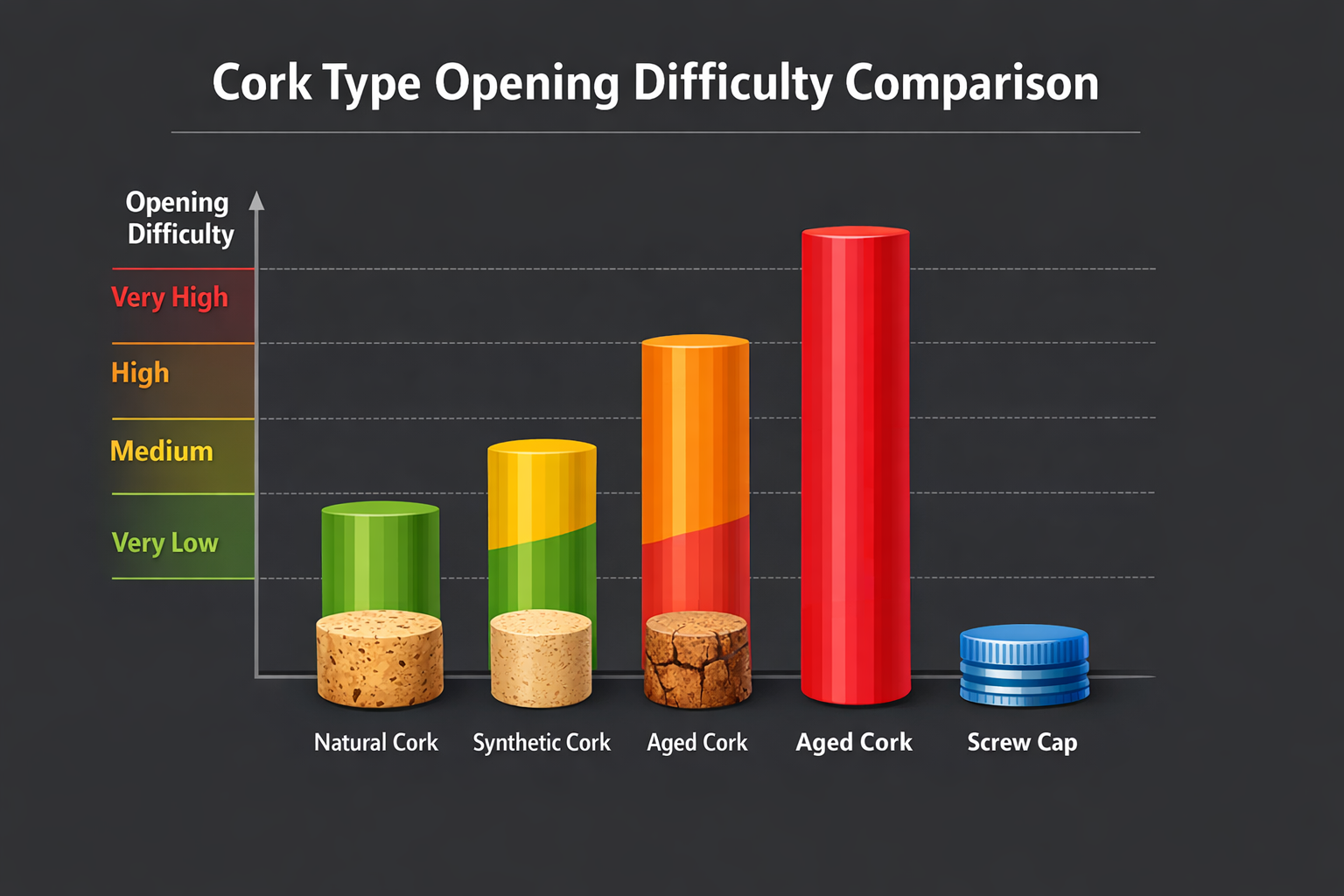
Different cork types require adjusted technique to avoid breakage or difficulty.
Cork Type | Difficulty Level | Recommended Tool | Key Risk |
Natural Cork | Medium | Double-hinged corkscrew | Crumbling in old wine |
Synthetic Cork | Medium-High | Firm pull corkscrew | Tight extraction |
Aged Cork | High | Ah-So or Durand | Fragmentation |
Screw Cap | Very Low | None required | Minimal |
Natural corks require slow vertical pulling, while synthetic corks often need firmer force due to tighter sealing.
Safety practices protect both the individual and the product.
Insert the worm fully into the cork and pull straight upward without twisting sideways to maintain structural integrity.
Never strike the bottle neck or expose the wine bottle to extreme temperature shifts, and inspect for cracks before applying pressure.
Stand the wine bottle upright several hours before opening to allow sediment to settle, then decant carefully.
Use a towel for grip, keep blades away from fingers, and open bottles on stable surfaces to reduce slipping.
Prompt: Hospitality businesses should conduct staff training sessions on wine bottle opening to reduce breakage costs and improve service professionalism.
Selecting the right tool improves efficiency and minimizes error.
Tool Type | Removes Cork | Risk Level | Ideal Setting |
Waiter’s Corkscrew | Yes | Low | Home & restaurant |
Ah-So Opener | Yes | Low | Aged wine service |
Durand Tool | Yes | Very Low | Collectors |
Screw & Pliers | Yes | Medium | Emergency |
Air Pump | Yes | Medium | Backup option |
Screw Cap | No cork | Very Low | Instant access |
Each tool addresses specific scenarios, and maintaining a small toolkit ensures preparedness.
If the cork breaks in half, reinsert the corkscrew deeper and pull slowly, switching to an Ah-So if necessary. If the cork falls into the wine bottle, push it fully inside and decant through a filter to remove debris. When the cork becomes stuck halfway, reinsert the worm carefully and apply steady leverage rather than jerking. If the bottle neck chips or cracks, discard the bottle for safety reasons and do not consume the wine.
Understanding how do you open wine bottle properly eliminates hesitation and reduces risk, ensuring that each opening is controlled, safe, and professional—especially when the wine bottle itself is manufactured to high structural standards by a trusted supplier like HUAYUE GLASS LIMITED. Whether using a corkscrew, handling a fragile aged vintage, opening sparkling wine, or improvising in an emergency, the objective remains consistent: protect the wine bottle, preserve the wine inside, and maintain composure throughout the process. By choosing durable, precision-crafted glass bottles from HUAYUE GLASS LIMITED, wineries and distributors can reduce breakage risk, enhance presentation quality, and deliver a premium experience from storage to service. With proper preparation, the right tools, and reliable packaging support from HUAYUE GLASS LIMITED, opening a wine bottle becomes predictable, efficient, and stress-free—making it an ideal partner for brands seeking quality, safety, and long-term supply stability.
A: The safest way to open a wine bottle is using a double-hinged corkscrew and pulling straight upward slowly.
A: You can open a wine bottle using a screw and pliers, or carefully push the cork inside and strain the wine.
A: A cork may break in a wine bottle due to age, dryness, or improper pulling angle during extraction.
A: No, a sparkling wine bottle requires loosening the cage and twisting the bottle gently to control pressure.
A: If cork falls into the wine bottle, push it fully inside and decant through a fine strainer before serving.


