
 English


Views: 0 Author: Site Editor Publish Time: 2026-07-08 Origin: Site


Packaging decisions directly dictate a winery’s shipping margins, bottling line efficiency, and retail shelf presence. The physical vessel holding your vintage interacts with automated machinery, influences pallet density, and communicates varietal style to the end consumer before the cork is ever pulled. Producers must balance historical consumer expectations regarding bottle shapes with modern operational constraints. Freight weight limits, glass shortages, and sustainability mandates force operations managers to rethink traditional packaging. Selecting the wrong glass profile can lead to labeling machine jams, excessive oxygen transmission, or shattered pallets during transit. This guide provides a technical evaluation framework for selecting the optimal wine bottle. We analyze anatomy, shape geometry, volumetric standards, closure compatibility, and procurement risk mitigation so you can align your packaging strategy with your production capabilities.
Shape Dictates Logistics: Traditional profiles (Bordeaux, Burgundy, Alsace) influence not just consumer perception, but pallet configuration, storage density, and shipping costs.
Anatomy Influences Bottling Line Setup: Precise knowledge of bottle dimensions—from the lip to the heel—is critical for calibration of filling heads, labeling arms, and corkers.
Weight vs. Perception: Heavyweight glass signals premium quality to consumers but exponentially increases freight costs and carbon footprint; lightweighting is becoming the industry standard.
Closure-Driven Specifications: Bottle neck finishes must be precisely matched to the chosen closure (cork, screwcap, or glass stopper) to control Oxygen Transmission Rates (OTR) and prevent spoilage.
Format Strategy: While standard 750ml formats drive volume, strategic use of small and large formats requires distinct bottling line tooling and compliance checks (e.g., EU volume caps).
Understanding the critical physical zones of a glass vessel ensures compatibility with automated bottling line machinery, labeling equipment, and storage infrastructure. Every millimeter matters when calibrating high-speed production lines. Operators must account for dimensional tolerances to prevent downtime.
The opening width, known as the bore diameter, must meet strict tolerances to accept specific closure finishes. A standard cork finish typically requires a 18.5mm internal bore. The collar sits just below the lip. It provides necessary structural reinforcement for cork insertion or metal cap crimping. If the collar is defective or features uneven glass distribution, the downward force of the corker jaws can shatter the glass on the line. The transfer ring, located just below the collar, allows the bottle to be gripped and moved by neck-handling equipment during manufacturing and packaging.
The neck is the tapered section leading down to the shoulder. This zone is crucial for establishing precise fill levels. Managing the headspace or ullage here dictates oxygen exposure during the corking process. A neck that is too wide increases the surface area exposed to oxygen, while a neck that is too narrow can cause wine to spill during high-speed filling when the displacement of the filling valve occurs. Vacuum corkers rely on a consistent neck profile to pull a proper vacuum before inserting the closure.
The transition zone, or shoulder, determines sediment collection and limits where labels can be applied smoothly. The body is the primary contact surface for labeling machines. It guides the rollers and centering bells on the bottling line. Any warping, known as "sunken sides," or uneven glass distribution in the body will cause labels to wrinkle, flag, or apply off-center. The label panel must be perfectly cylindrical. Scuff rings at the top and bottom of the body protect the label area from abrasion when bottles rub against each other on conveyors.
The heel supports the vertical load of stacked pallets in the warehouse. It must withstand significant top-load pressure. The punt is the indentation at the base. It provides structural integrity against internal pressure, aids in sedimentation management during decanting, and assists manual pouring stability. Deep punts require more glass, increasing the overall weight of the unit. The base also features a stippled pattern (knurling) to reduce thermal shock during manufacturing and provide traction on wet conveyor belts.
Selecting a shape requires aligning with the varietal's historical precedent while maximizing labeling surface area and case-packing efficiency. Different profiles demand different handling procedures, star wheels, and feed screws on the packaging line.
This shape features straight sides, high distinct shoulders, and a deep punt. It is the global standard for Cabernet Sauvignon, Merlot, Sauvignon Blanc, Cabernet Franc, and Malbec. The straight body is excellent for horizontal binning and standard palletization. High shoulders catch sediment during decanting. This makes it functionally necessary for age-worthy reds. On the bottling line, the straight sides provide excellent stability, allowing for higher conveyor speeds and fewer tipping incidents.
Characterized by a wider base and gently sloping shoulders, this profile is universally recognized for Pinot Noir, Chardonnay, Syrah, and Gamay. The larger diameter (often exceeding 80mm) requires specific case dividers and takes up more footprint on a pallet, reducing the total number of cases per truckload. Sloping shoulders offer less sediment control but align perfectly with consumer expectations for delicate, aromatic wines. Bottling lines require specific change parts to handle the wider diameter without jamming.
This tall, slender shape features a narrow diameter and minimal punt. It is the traditional choice for Riesling, Gewürztraminer, and Pinot Gris. While aesthetically striking, it presents vertical clearance challenges on retail shelves and standard wine racks. The high center of gravity also increases the tipping risk on high-speed bottling lines, requiring slower conveyor speeds and precise guide rail adjustments. The elongated body provides a large vertical canvas for labeling but requires careful application to avoid skewing.
Engineered with heavyweight glass, sloping shoulders, and an exceptionally deep punt. This profile is mandatory for Champagne, Prosecco, Cava, and Traditional Method Sparkling wines. The thick walls withstand internal pressures up to 6 atmospheres (approximately 90 PSI). It requires specialized cork finishes and wire cages known as muselets to secure the closure safely. The glass distribution must be perfectly even to prevent weak points that could explode under pressure. Handling these on the line requires robust machinery capable of managing the extra weight and diameter.
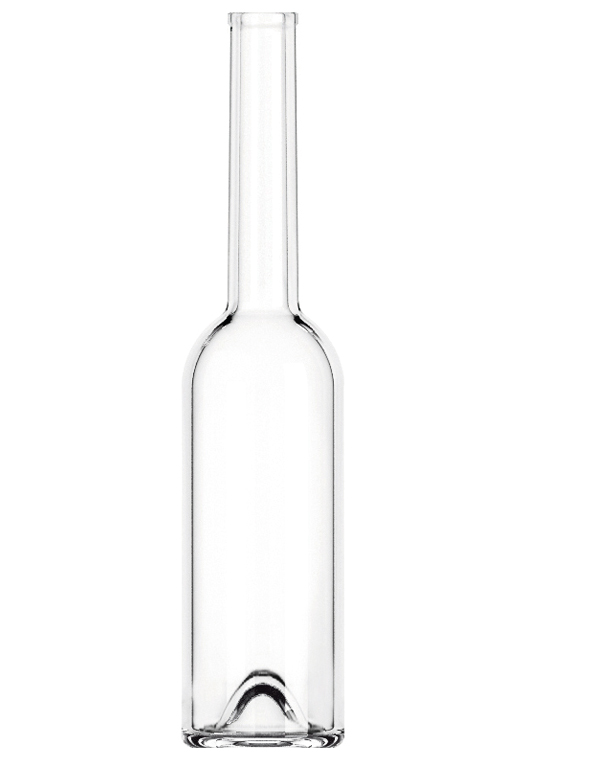
Standardizing core SKUs drives operational efficiency. However, strategically deploying alternative sizes opens up direct-to-consumer and on-premise channels. Producers must evaluate the tooling changeovers required for different volumes and the impact on warehouse storage.
This is the undisputed global standard for trade and retail. Sourcing a reliable 750ml Clear Glass Bottle Wine Drink Storage solution is critical for high-turnover whites and rosés. These clear formats require UV-resistant coatings or rapid supply chain movement to prevent lightstrike degradation. Standardizing around the 750ml size minimizes downtime associated with swapping out filler valves, corker jaws, and labeler wipe-downs.
Small formats include the 187ml Piccolo and the 375ml Demi. They carry a high packaging cost per milliliter of wine. These sizes are ideal for airline contracts, hotel minibar distribution, and premium tasting room samples. Operating small formats often requires dedicated filler valves and labeler change parts. Fill level consistency is notoriously difficult in small formats, requiring highly sensitive fill height inspectors on the line.
Large formats command attention but introduce significant production hurdles. Anything above a 3L double magnum usually requires manual filling, hand-corking, and custom wax seals. The sheer weight of the glass and liquid makes automated handling nearly impossible for most standard winery setups.
Format Name | Volume | Standard 750ml Equivalent | Primary Use Case |
|---|---|---|---|
Magnum | 1.5 L | 2 Bottles | Premium retail, optimal aging |
Jeroboam (Double Magnum) | 3.0 L | 4 Bottles | Cellar collections, auctions |
Methuselah | 6.0 L | 8 Bottles | Event centerpieces, display |
Salmanazar | 9.0 L | 12 Bottles (1 Case) | High-end hospitality |
Balthazar | 12.0 L | 16 Bottles | Exhibitions, special orders |
Nebuchadnezzar | 15.0 L | 20 Bottles | Large scale events, display |
Producers must also verify regulatory compliance. For instance, EU legislation caps still wine sold to consumers at 10 liters. This restricts larger formats like the Balthazar and Nebuchadnezzar primarily to sparkling wines or custom exhibition orders. Handling these formats requires specialized lifting equipment to prevent workplace injuries.
Protecting the wine from ultraviolet degradation while managing the physical weight of the finished product is a constant balancing act. Material choices impact both shelf life and freight expenses. Operations teams must weigh the aesthetic desires of the marketing department against the harsh realities of logistics.
Antique Green and Amber glass block 70 to 90 percent of harmful UV rays. This protection is mandatory for red wines and age-worthy whites to prevent photochemical degradation, which creates unpleasant sulfur compounds. Flint, or clear glass, maximizes visual appeal for Rosé and crisp whites. When utilizing clear glass, producers must rely on protective secondary packaging like enclosed outer cartons to mitigate UV risk during transit and warehouse storage. Spectrophotometer readings are often used during quality control to verify the exact UV blocking capacity of incoming glass lots.
The industry is rapidly transitioning from 550-gram premium heavyweights to 390-gram eco-bottles. This shift reduces per-pallet freight costs and carbon emissions significantly. The main trade-off is overcoming the consumer bias that equates heavy glass with high-quality wine. Operationally, bottling managers must adjust labeling machine pressure and star-wheel tension to avoid crushing thinner-walled glass during production. Vertical crush strength is lower in lightweight glass, meaning pallet stacking heights in the warehouse may need to be reduced to prevent bottom-tier collapse.
Matching the neck finish to the closure mechanism ensures a hermetic seal and controlled aging. A mismatch here leads to immediate oxidation, leakage, or pushed corks during transit.
Cork closures require a standard CETIE finish. The internal bore must be perfectly cylindrical to maintain consistent compression across the cork's surface. This setup is best for long-term aging and traditional market appeal. Producers must rigorously monitor Oxygen Transmission Rates and TCA risks when using natural corks. The moisture content of the cork and the vacuum pulled by the corker must be perfectly calibrated to prevent the cork from expanding too quickly and shattering the neck.
Screwcaps require a BVS threaded neck finish. Bottling lines must be equipped with specialized capping heads and rollers to apply the seal correctly. The application torque and top load pressure must be dialed in precisely. Glass threads are highly susceptible to chipping during transit. Incoming glass quality assurance is critical, as a chipped thread will compromise the seal, allow oxygen ingress, and ruin the wine. Operators must frequently check the thread rollers for wear and tear.
Vinolok and other glass stoppers require a highly specific internal neck profile to seat the O-ring correctly. They carry a high unit cost but offer excellent premium appeal. Crown caps are the standard for Pét-Nat and traditional method sparkling wines during tirage. They require pressure-rated glass with a minimum 6 bar tolerance to handle secondary fermentation. The crimping mechanism for crown caps applies significant downward force, requiring a robust collar and neck design.
Securing a reliable, cost-effective supply of glass that runs flawlessly on existing bottling infrastructure is the final hurdle. A beautiful design is useless if it cannot be sourced consistently or if it causes constant downtime on the packaging line.
Producers must weigh domestic versus international sourcing. International glass often offers lower unit costs but requires ordering in full container loads. This introduces lead-time volatility and requires significant warehouse space. Domestic sourcing offers flexibility and lower minimum order quantities, but usually at a higher per-unit price. Always request technical drawings before finalizing a Wine Bottle order to verify compatibility with your specific bottling line change parts. Establish an Acceptable Quality Limit (AQL) agreement with your supplier to dictate the allowable percentage of defects per pallet.
Verify the maximum diameter against your star wheels and feed screws.
Check the overall height against your filler bowl clearance.
Confirm the bore diameter matches your closure specifications.
Test a sample pallet on the line before committing to a full production run.
Optimize your packaging operations by executing these steps:
Audit your current bottling line specifications to determine maximum diameter and height tolerances before ordering new glass.
Request technical drawings from suppliers to verify the exact bore diameter matches your chosen closure system.
Calculate the freight savings of transitioning your high-turnover SKUs to lightweight glass options under 420 grams.
Implement a strict incoming quality control check for BVS thread integrity if transitioning to screwcap closures.
A: The global standard volume is 750ml. This size was historically adopted because it roughly equals one-fifth of a US gallon and matches the standard lung capacity of early glassblowers.
A: The punt provides structural integrity, especially for sparkling wines under pressure. It also helps collect sediment in aged red wines and provides a stable grip for pouring.
A: No. Screwcap bottles have a BVS threaded finish and a different internal bore profile. Inserting a cork into a screwcap bottle will not create a proper seal and risks breaking the glass.
A: Weights vary significantly. Lightweight eco-bottles weigh between 350g and 420g. Standard bottles average 450g to 500g, while heavy premium bottles can exceed 600g.
A: Green glass blocks a significant portion of ultraviolet light. UV exposure causes photochemical reactions that degrade the wine, leading to a fault known as lightstrike.
A: A Magnum is a large format bottle that holds 1.5 liters of wine, which is exactly double the volume of a standard 750ml bottle. It is highly regarded for long-term cellaring.


