
 English


Views: 0 Author: Site Editor Publish Time: 2026-07-05 Origin: Site


For private label spirits, the physical packaging is the primary driver of initial consumer trial. The glass container serves as the immediate visual and tactile representation of the liquid inside, directly influencing buying behavior in a highly crowded retail landscape. Brand owners frequently underestimate the friction between aesthetic design aspirations and operational realities. Selecting a vodka glass bottle involves navigating complex trade-offs involving Minimum Order Quantities (MOQs), bottling line compatibility, shipping durability, and unit economics. This guide provides a technical evaluation framework for selecting premium packaging, comparing stock versus custom molds, analyzing closure compatibility, and mitigating supply chain risks to ensure a successful product launch. You will learn how to align your packaging choices directly with your operational capabilities on the bottling line.
Material Clarity Dictates Perception: The choice between standard flint and super flint glass directly impacts the perceived purity and premiumization of the vodka.
Customization vs. Speed to Market: Stock molds (like Nordic or Round shapes) offer lower MOQs and faster lead times, while bespoke molds require upfront tooling investments but deliver unmatched brand differentiation.
Closure Compatibility is Critical: Selecting the right neck finish—whether accommodating a standard screw cap or a custom recyclable vodka bottle with cork—dictates both the bottling process and the shelf-life integrity.
Total Landed Cost Matters More Than Unit Price: Freight, pallet configuration, breakage rates, and labeling inefficiencies often eclipse the raw per-unit cost of the glass itself.
Glass composition determines the optical clarity of your packaging. Manufacturers categorize glass into standard flint, high flint, and super flint grades. Standard flint contains trace amounts of iron from the silica sand. This iron imparts a faint green or blue tint to the finished product. High flint reduces these impurities for better clarity through the addition of decolorizing agents like selenium or cobalt. Super flint represents the highest grade available. Foundries use premium, low-iron raw materials and run furnaces at higher temperatures to eliminate color distortion completely.
Super flint remains the industry standard for premium clear spirits. Consumers equate absolute transparency to liquid purity and meticulous distillation. Any tint in the glass detracts from this perception. Brands also utilize secondary treatments to alter the glass surface. Frosted glass treatments simulate condensation and coldness. Acid-etching creates a permanent matte finish by micro-pitting the glass surface. Silk-screening applies ceramic inks directly onto the surface, which are then baked into the glass in a lehr oven. These techniques communicate a smooth drinking experience before the consumer even opens the bottle.
Physical weight heavily influences consumer value perception. A heavy glass base, known as the punt, provides a substantial tactile feel. When a consumer picks up a heavy bottle, they unconsciously associate the weight with premium quality. Thick glass bottoms elevate the center of gravity and increase the overall height of the packaging without changing the internal fill volume. This allows a standard 750ml volume to occupy more vertical space on the retail shelf.
Heavy glass designs introduce distinct operational trade-offs on the production floor. Thicker bases require more raw material (gob weight) and longer cooling times in the mold. This slows down the production speed (bottles per minute) at the foundry. Heavier pallets reduce the total number of units you can ship per shipping container due to highway weight limits. Increased freight weight elevates shipping expenses and expands the carbon footprint of your supply chain. You must balance the psychological benefits of a heavy punt against the logistical realities of global distribution.
Your packaging must perform in diverse lighting environments. On-premise bars often feature low-light settings illuminated by targeted LED displays behind the backbar. Off-premise retail shelves rely on harsh overhead fluorescent lighting. A distinct silhouette ensures your product stands out regardless of the environment. Unique shapes catch ambient light and draw the consumer's eye away from established competitors.
Visual stand-out drives spontaneous purchase decisions. Consumers frequently buy unfamiliar brands based entirely on collectible bottle aesthetics. Tactile elements encourage physical interaction. Embossing raises the glass surface, while debossing creates recessed designs directly in the mold. These physical textures invite consumers to touch the product. Striking designs also encourage social sharing. A visually compelling Vodka Bottle naturally generates user-generated content and digital engagement across social media platforms.
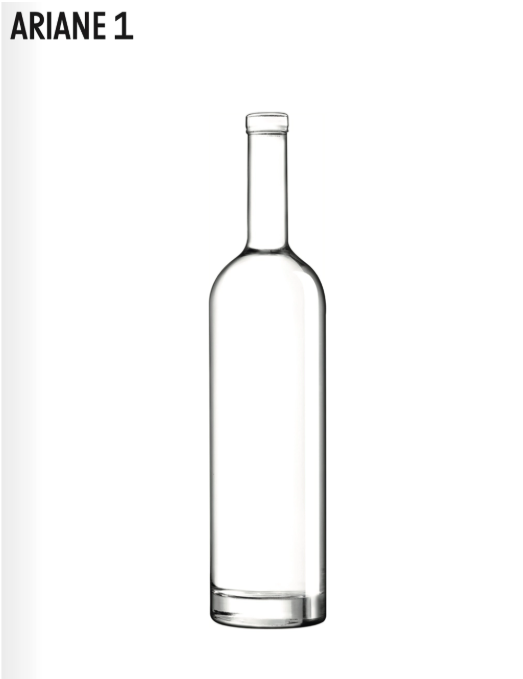
Stock molds provide ready-made solutions for rapid deployment. Foundries maintain these molds for continuous production runs. Common industry shapes include Nordic, Round, Square, and Cylinder profiles. Each shape communicates a specific brand identity and carries distinct operational characteristics on the bottling line.
Bottle Shape | Brand Aesthetic | Labeling Efficiency | Packing Density |
|---|---|---|---|
Nordic / Cylindrical | Modern, clean, craft-focused | High (Easy wrap-around) | Excellent |
Round | Traditional, classic appeal | High (Standard equipment) | Excellent |
Square | Bold, premium, disruptive | Medium (Requires orientation) | Moderate (Corner friction) |
Flask / Oval | Vintage, specialized | Low (Complex curves) | Good |
Stock shapes dictate operational efficiency. Round and Nordic profiles move seamlessly through automated labeling equipment without requiring complex orientation. Square designs require specialized orientation sensors (like a bottom notch or optical spotter) to ensure labels align perfectly on flat panels. Packing density also varies. Round bottles nest efficiently in shipping cartons. Square bottles create rigid footprints but risk corner chipping during transit if the dividers are too thin.
Stock bottles offer immediate availability. They feature proven structural integrity and require low MOQs. You can differentiate a standard shape through creative secondary packaging. Custom labeling, neck tags, and unique closures transform a generic silhouette into a proprietary brand asset without the upfront tooling investment.
Bespoke molds deliver unmatched brand differentiation. The custom development lifecycle begins with conceptual sketches. Engineers translate these sketches into 3D CAD models to evaluate volumetric displacement and headspace. Manufacturers then produce acrylic or 3D-printed prototypes. These physical models allow you to test ergonomics, pour angles, and visual proportions before committing to metal tooling.
Once approved, the foundry cuts cast-iron test molds (blank and blow molds). Sample iteration timelines typically span several weeks. You must evaluate these glass samples for wall thickness uniformity, vertical load strength, and closure fit. Full production molds require significant upfront investment. Glass foundries demand high MOQs to justify halting their furnaces for a custom production run. Flexible manufacturers now cater specifically to craft brands, offering lower MOQs for bespoke designs. Always secure your intellectual property rights when funding a custom mold to prevent competitors from using your proprietary silhouette.
Regulatory bodies strictly enforce legal fill volumes. You must adhere to specific capacities based on your target market. The US Alcohol and Tobacco Tax and Trade Bureau (TTB) mandates standard sizes like 750ml. The European Union and UK markets operate on a 700ml standard. Designing a single container to serve both markets requires careful volumetric planning to avoid compliance violations.
Glass manufacturing involves inherent physical tolerances. Molten glass expands and contracts unpredictably during the cooling phase. This creates minor variations in the internal volume of each unit. Fill-level variations become highly visible on the retail shelf. If the glass thickness varies at the base, the liquid line will appear uneven across multiple units displayed side-by-side. You must specify strict manufacturing tolerances and define the exact fill point distance from the top of the finish to ensure visual consistency.
Bottle geometry directly affects label application. Tapers, compound curves, and raised ridges complicate the labeling process. Automated lines require smooth, predictable surfaces. Paper labels offer classic textures but struggle on curved glass, often wrinkling or flagging at the edges. Plastic clear-on-clear labels provide a "no-label" look but demand flawless application to avoid trapped air bubbles.
Direct ceramic printing, known as Applied Color Lettering (ACL), bakes the design directly into the glass. This eliminates paper wrinkling entirely and resists scuffing during transit. If you use traditional labels, your design must include a defined label panel. A slight recess protects the label edges from scuffing against other bottles on the line. It also provides a mechanical guide for the labeling machinery to ensure high-speed application efficiency.
The neck finish dictates your sealing mechanism. Standard finishes include GPI thread profiles for screw caps and RoPP (Roll-on Pilfer Proof) aluminum closures. These provide excellent tamper evidence and run efficiently on high-speed lines. Bar Top finishes accommodate cork stoppers. They deliver a traditional, premium unboxing experience.
Tamper-evident bands ensure product safety. Wax seals offer a highly artisanal aesthetic but require slow, manual application or expensive automated dipping machines. Shrink capsules provide a cost-effective tamper barrier. You must match the exterior neck profile to your chosen capsule to ensure a tight, wrinkle-free shrink when passing through the heat tunnel.
Market demand for eco-friendly packaging continues to rise. Consumers actively seek brands prioritizing sustainability. Sourcing a Custom Recyclable Vodka Bottle With Cork aligns your product with modern environmental values. You must evaluate technical specifications carefully when integrating cork closures on automated lines.
Natural cork offers traditional appeal but carries risks of flavor scalping and variable oxygen transmission rates (OTR). Micro-agglomerated corks provide consistent density and eliminate TCA contamination. Synthetic T-corks guarantee zero flavor interference and maintain structural integrity over time. Glass stoppers deliver ultimate premiumization. You must ensure precise mechanical tolerances between the internal neck diameter (the bore) and the stopper. Inconsistent bore dimensions lead to leakage during transit, cork push-out during temperature fluctuations, or excessive extraction force for the consumer.
Production scale dictates your sourcing strategy. Stock bottles generally offer accessible MOQs, often starting at just one or two pallets. This allows emerging brands to launch without massive inventory commitments. Custom runs operate on entirely different scales. Foundries require large volumes to justify the setup time for mold changes. Custom orders routinely demand tens of thousands of units per run.
Factory production schedules dictate your lead times. Glass plants operate in campaign runs, switching glass colors and molds on strict schedules. If you miss a super flint production window, you may face months of delays. Seasonal availability also impacts timelines. You must forecast inventory needs well in advance of peak holiday bottling seasons to avoid stockouts.
Transit packaging protects your investment. Bulk palletization layers raw glass between cardboard slip sheets. This maximizes the number of units per pallet but requires automated depalletizing equipment at your facility. Pre-packed reshipper cartons deliver glass inside the exact boxes you will use for final distribution. This suits manual or semi-automated bottling lines perfectly.
Bottle shape heavily impacts pallet density. Cylindrical shapes nest tightly, maximizing space. Irregular or wide-shouldered designs reduce the unit count per pallet. Lower pallet density increases your per-unit shipping expenses significantly. You must optimize your pallet configuration, utilizing stretch wrapping and corner boards, to maintain operational efficiency and prevent load shifting during ocean transit.
Glass manufacturing is an imperfect science. You must establish strict Acceptable Quality Limit (AQL) standards with your vendor. AQL defines the maximum number of defective units allowed in a batch before rejection. Screen shipments for critical defects upon arrival using polariscope testing to check for residual stress.
Inspect for seeds (small trapped air bubbles) and blisters (larger surface bubbles) that compromise aesthetics.
Measure wall thickness distribution to identify thin spots that create weak points in the container.
Test for thermal shock vulnerabilities, which occur when the glass cools unevenly during the annealing process.
Verify vertical load strength to ensure the bottles can withstand the downward pressure of automated corking machines.
These defects cause catastrophic failures on the bottling line when subjected to pressure or temperature changes. Rigorous QA protocols prevent defective glass from reaching your production floor, minimizing downtime and product loss.
Request unbranded glass samples from multiple manufacturers to evaluate clarity, weight, and base thickness physically.
Audit your bottling facility's equipment tolerances to ensure compatibility with your chosen neck finish and label panel geometry.
Obtain technical blueprints from the foundry to verify exact internal bore dimensions for your closure system.
Establish clear Acceptable Quality Limit (AQL) standards in your vendor contracts to mitigate thermal shock and breakage risks.
A: The global standards vary by region. The US market strictly utilizes the 750ml format for standard retail distribution. The European Union and UK markets mandate a 700ml standard. Brands also frequently produce standard liter (1000ml) sizes for on-premise bar use and 1.75L formats for bulk retail environments.
A: The primary difference lies in the iron content of the raw materials. Standard flint contains trace iron, which leaves a slight greenish tint. Super flint utilizes highly purified sand and materials to eliminate all color. This provides the absolute optical clarity required to showcase premium clear spirits.
A: Evaluate manufacturers based on their engineering capabilities, prototyping speed, and quality control protocols. Request examples of previous custom work to assess glass distribution and clarity. Verify their Acceptable Quality Limit (AQL) standards and ensure they can meet your required production tolerances for automated bottling.
A: Yes, automated lines handle cork closures efficiently if the glass meets strict tolerances. The internal neck bore must remain perfectly consistent across the production run. Automated corkers require precise bar-top insertion tolerances to seat the closure firmly without shattering the neck or tearing the cork material.
A: The thick base, known as a punt, serves as a powerful psychological cue for premiumization. It adds substantial physical weight and increases the overall height of the packaging on the shelf. This enhances the perceived value without increasing the actual volume of the liquid inside.
A: Industry averages for bespoke glass runs generally require high volume commitments to justify factory setup times. Custom runs usually demand tens of thousands of units per production cycle. However, some specialized foundries now offer flexible, lower-volume runs tailored specifically for craft distillers and private label brands.


