
 English


Views: 0 Author: Site Editor Publish Time: 2026-04-22 Origin: Site


A vodka glass bottle is not just a container. It is your brand's silent salesperson and a critical driver of your supply chain economics. Every curve communicates value to potential buyers.
In a saturated liquor market, packaging often dictates first impressions and shelf velocity. However, selecting the wrong vodka bottle can lead to margin-crushing logistical issues, label adhesion failures, or non-compliant closures. Costly mistakes here drain budgets before the liquid ever reaches a glass.
This guide bypasses surface-level design tips to provide a rigorous, decision-stage framework for evaluating glass quality, mitigating hidden operational costs, and selecting a bottle that balances premium aesthetics with scalable manufacturing realities. You will learn to navigate the complex intersection of retail psychology and supply chain mechanics.
Retail Psychology: Leverage the "20-10-5 shelf principle" to ensure your silhouette, branding, and tactile details convert browsers into buyers.
Form Meets Function: Evaluate shapes not just for aesthetics, but for bartender ergonomics (pour control) and bottling line compatibility.
Hidden TCO: Factor in secondary packaging, stackability, and freight weight—a heavy, custom-shaped vodka bottle significantly increases lifetime shipping costs.
Risk Mitigation: Never skip physical prototyping; testing for label adhesion and tamper-evident closure compatibility is mandatory before mass production.
Supplier Vetting: Prioritize manufacturing partners with transparent MOQs, clear mold-creation lead times (typically 8–16 weeks), and local logistical support.
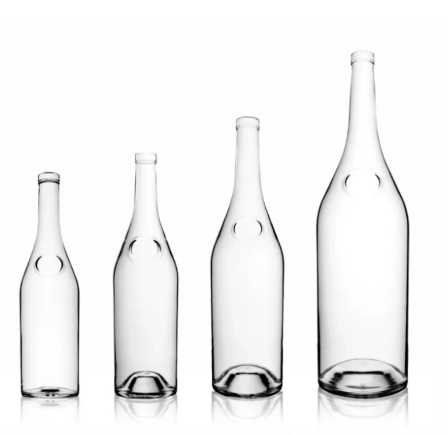
You must treat packaging as a core business strategy. Consumers judge liquid quality based entirely on external presentation. A well-designed bottle justifies a higher price point. It commands attention in crowded retail aisles.
Define success by how the bottle performs at distinct distances in a retail environment. We call this the 20-10-5 rule. At 20 feet away, shoppers notice the overall silhouette and color scheme. Your bottle must stand out from a sea of generic shapes. At 10 feet, they look for brand recognition. Clear typography and striking logo placements matter here. Finally, at 5 feet, tactile finishes drive the purchase decision. A consumer will pick up the bottle. If the glass feels cheap, they put it back. You must win at all three distances.
Your design must reflect your actual market position. Contrast minimal, pragmatic approaches with luxury positioning. Minimalist brands focus purely on liquid quality. They use simple, lightweight glass. This approach keeps margins high. Conversely, luxury brands use heavy bases and complex embossing. They sell an experience.
Common Mistake: Startups often attempt luxury packaging on a pragmatic budget. They choose heavy glass but cut corners on labels. This creates a confusing brand identity. Align your packaging costs directly with your target retail price.
Assess whether the perceived premium of a custom mold justifies the initial capital expenditure. Custom molds require significant upfront investment. They also demand high minimum orders. Alternatively, decorating a high-quality stock bottle saves time and capital. Many successful brands launch using premium stock shapes. They achieve differentiation through unique screen printing or custom closures. Always calculate your exact value-to-cost ratio before committing to bespoke glass molds.
Shape influences both consumer perception and operational efficiency. You must balance visual appeal with practical utility.
Analyze industry standards versus avant-garde designs. Classic cylindrical or Bordeaux-style bottles feel traditional and trustworthy. They fit easily on standard shelves. Modern silhouettes use geometric or asymmetrical designs. They disrupt visual expectations. However, unique shapes often face retailer pushback. An oversized or oddly shaped bottle might not fit on standard bar rails. Always consider the physical limitations of retail shelving when choosing your silhouette.
Evaluate the neck and shoulder design for bartender usability. A premium vodka glass bottle must allow for smooth pour control. Bartenders hate heavy, awkward bottles. If they cannot grip the neck easily, they will not reach for it during a rush. Furthermore, the neck opening must accommodate standard speed-pourer fitments. A mismatched neck size ruins the professional pouring experience.
Capacity choices directly impact your market penetration strategy. Different sizes serve completely different buyer intents. We recommend structuring your portfolio logically.
Capacity | Primary Market Intent | Shelf Strategy & Logistics |
|---|---|---|
50ml / 200ml | Low barrier-to-entry sizes. Ideal for sampling, promotional trials, and airline distribution. | Drives impulse buys at registers. Very low shipping risk but requires specialized mini-filling lines. |
750ml | The undisputed industry standard for baseline pricing and consumer expectations. | Fits all standard retail shelves and bar rails. Highly optimized for automated packaging lines. |
1L / 1.75L | Premium footprint options. Serves high-volume accounts and bulk-buying consumers. | Dominates visual shelf space. Heavy logistical burden. Requires reinforced outer carton packaging. |
The physical composition of your bottle dictates its perceived quality. Small material choices yield massive sensory differences.
Purity is paramount in the vodka category. You should specify Extra-Flint glass for clear spirits. Extra-Flint is crystal clear and showcases the liquid's pristine nature. Standard flint glass often carries a faint green tint. This slight discoloration implies lower quality.
Beyond clarity, consider frosted finishes. Frosting provides a premium tactile feel. It grips well and resists fingerprints. Alternatively, explore tinted glass for specific product lines. Amber or cobalt blue glass protects flavored vodkas requiring UV light degradation protection. Sunlight can break down delicate botanical infusions over time.
Map out the trade-offs between decoration methods. Screen printing bakes ink directly into the glass. It looks highly durable and high-end. It resists moisture perfectly. However, it costs more per unit.
Paper or film labels remain highly cost-effective and flexible. You can change label designs quickly. Highlight the necessity of testing label adhesion on curved or frosted surfaces. Adhesives react poorly to moisture and temperature changes. A peeling label destroys brand trust instantly. Always request adhesive resilience tests.
Align the neck finish precisely with your chosen closure type. A mismatch causes leaks and spoilage.
Corks (Synthetic or Natural): Deliver a traditional, premium unboxing experience. Best for luxury positioning.
Screw Caps (ROPP): Highly practical and engineered for high-volume production. They guarantee an airtight seal.
Glass Stoppers: Offer elite aesthetics but require precise inner neck tolerances to prevent evaporation.
Best Practice: Ensure strict compatibility with tamper-evident caps or shrink capsules. Retailers require tamper-evidence to meet strict safety and compliance standards. A beautifully designed closure fails if it cannot accommodate a legal safety seal.
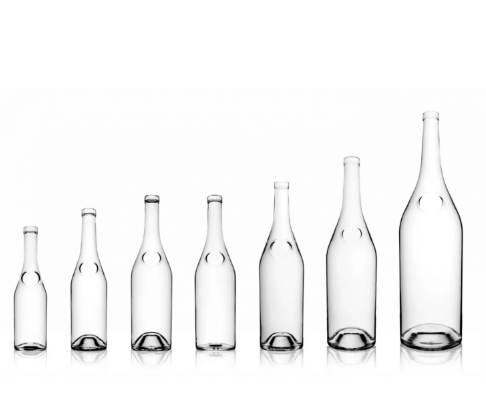
Design choices trigger financial ripples across your entire supply chain. You must calculate the Total Cost of Ownership (TCO) before approving a design.
Evaluate how supplier MOQs align with your cash flow and storage capacity. Custom molds usually require massive MOQs. High MOQs lower your unit costs drastically. However, they tie up crucial startup capital. You also need physical warehouse space to store tens of thousands of empty bottles. Balance your desire for custom glass against your immediate cash flow realities.
Understand that an irregularly shaped vodka bottle often requires custom shipping cartons. Standard cylindrical shapes fit perfectly into cheap, pre-made corrugated boxes. Geometric or overly tall designs demand expensive die-cut inserts. They need extra padding to survive transit. Standard shapes reduce your outer-packaging expenses significantly.
Factor in the physical footprint of the glass. A heavy-base glass elevates perceived value immensely. Consumers associate weight with luxury. However, this drastically increases inbound freight costs. It also inflates outbound shipping costs to distributors.
Furthermore, ensure the design allows for safe warehouse stackability. A bottle with an unusually narrow base risks toppling on pallets. Fragile designs increase your acceptable breakage rates.
Confirm that the chosen bottle feeds seamlessly into your existing automated equipment. Do not design in a vacuum. Hand the 3D files to your operations manager or co-packer early. A uniquely wide shoulder might jam the filling machine. A tapered body might spin during automated labeling. You must prevent line jams and manual labor overruns. Standardized equipment hates non-standard bottle shapes.
Choosing a manufacturing partner is a high-stakes decision. You are hiring a strategic partner, not just buying raw materials.
Treat any supplier willing to skip 3D rendering or physical sampling as a major red flag. Digital renderings look perfect on screens. Physical reality is entirely different. You must hold the glass. You must pour water from it. Prototyping exposes hidden flaws in weight distribution and glass thickness. Never authorize mass production without holding a finalized physical prototype.
Detail the process for inspecting first-run samples. Build a strict QA protocol.
Glass Wall Uniformity: Inspect the bottle against a bright light. Look for uneven glass distribution. Thin spots create weak points.
Structural Integrity: Perform standard drop tests and thermal shock tests. Ensure it survives freezing temperatures.
Aesthetic Consistency: Check for air bubbles, seams, and exact color matching. Tolerances must remain tight.
Look beyond raw manufacturing capabilities. Shortlist suppliers offering comprehensive, end-to-end services. Exceptional partners provide custom mold engineering and closure sourcing under one roof. They ensure the cap fits the neck perfectly. Furthermore, prioritize suppliers with local warehousing. Local stock acts as a crucial buffer against international supply chain shocks and port delays.
Build accurate and pessimistic production timelines. Custom mold development and initial production typically require an 8 to 16-week lead time before shipping. Ocean freight adds another 4 to 6 weeks. Planning a holiday launch? You must begin the custom mold process by early spring. Delays in glass delivery halt your entire revenue engine.
Choosing a vodka glass bottle is a complex, cross-functional decision. It requires aligned input from your marketing, operations, and finance teams. You must balance the "20-10-5" retail appeal with strict logistical realities. Heavy, custom bottles look incredible but carry hidden lifetime shipping costs. Stock bottles keep costs low but demand creative labeling to stand out.
Before moving forward, audit your bottling line capabilities strictly. Define your exact TCO threshold, factoring in custom freight and corrugated packaging. Finally, request physical stock samples from your shortlisted suppliers. Test them rigorously before committing your capital to a custom mold.
A: Stock bottle MOQs can be as low as a few pallets (around 1,000 to 5,000 units). However, custom mold MOQs typically start between 10,000 and 50,000 units, depending on the factory. Factories require high volumes to justify the downtime needed to change out heavy machinery molds.
A: A standard timeline is 8 to 16 weeks. This encompasses the initial 3D design phase, creating the physical steel mold, running the first sampling batch, and executing mass production. Ocean transit times will add an additional 4 to 6 weeks to your schedule.
A: Startups typically benefit from combining a stock bottle with custom decoration (like unique screen printing). This approach ensures speed-to-market and protects cash flow. Established brands seeking strict differentiation and market dominance should invest in custom molds to secure proprietary brand assets.
A: ROPP (Roll-On Pilfer-Proof) screw caps offer excellent security and high-speed bottling efficiency. For premium positioning, natural or synthetic corks paired with tight shrink capsules work best. Both options effectively integrate tamper-evident seals, which are strictly required for retail compliance and consumer safety.


