
 English


Views: 0 Author: Site Editor Publish Time: 2026-07-04 Origin: Site


The retail shelf is a zero-sum environment. A premium spirit bottle is often the first and only physical touchpoint a consumer has with a brand before making a purchasing decision. Distilleries and beverage brands must balance the desire for bespoke, premium brand identity with the harsh operational realities of glass manufacturing, supply chain lead times, and bottling line compatibility. This guide provides a technical framework for evaluating custom bottle design—from initial conceptualization and mold investment to full-scale production—ensuring the final product drives conversions without compromising operational margins.
Custom molds require significant upfront capital (tooling costs) but can drastically reduce per-unit packaging costs at scale compared to sourcing premium stock options.
Design aesthetics must be strictly audited against operational constraints, including automated label application, closure insertion pressure, and high-speed bottling line stability.
Material specifications (e.g., flint vs. extra-flint glass, bottom weight) directly impact perceived retail value, but also dictate freight costs and sustainability metrics.
Production lead times for custom glass typically range from 12 to 24 weeks; establishing supply chain redundancy and buffer inventory is critical for continuous distillery operations.
Calculating the break-even point is the first step in packaging development. You must determine where the investment in custom tooling is offset by lower per-unit production costs. Standard stock shapes often dilute brand messaging in highly competitive markets. They fail to justify a premium shelf position. Custom molds build brand equity by creating a proprietary silhouette that consumers instantly recognize. When you control the mold, you control the exact physical representation of your liquid on the shelf.
Rushing the conceptualization phase leads to structural redesign loops. It wastes mold fees and delays product launches. Lifecycle planning requires factoring in the longevity of the design. You should consider the potential for brand extensions. Using the same custom mold for different expressions via varied decoration keeps production efficient while expanding your portfolio. A well-engineered custom mold can serve a distillery for decades if designed with future scalability in mind.
To properly assess the business case, distilleries must evaluate their production forecasts against the tooling investment. If you are running small, limited-edition batches, standard glass might suffice. However, once you cross specific volume thresholds, the per-unit savings of a custom mold quickly absorb the initial tooling investment. You also gain the distinct advantage of supply chain control, as you own the intellectual property of the bottle shape.
You do not always need a ground-up mold creation. Utilizing existing molds with proprietary modifications offers a practical middle ground. You can integrate custom embossing plates, unique closures, or bespoke neck finishes into standard glass blanks. This approach reduces initial tooling investments while still delivering a unique visual impact. It allows craft producers to achieve a custom look without the extended lead times of full mold development.
Leveraging internationally recognized stock capacities streamlines compliance. For example, adopting a 700ml Clear Glass Bottle Brandy Spirit Bottling standard allows for heavy customization through labeling and secondary packaging. You bypass the extended lead times of full custom molds while maintaining global distribution readiness. A thorough cost-benefit analysis will dictate whether hybrid customization or full mold creation best serves your production run rates.
When executing a hybrid strategy, consider the following operational steps:
Identify a stock bottle shape that aligns with your brand's general aesthetic and fits your existing bottling line star wheels and guide rails.
Work with the glass manufacturer to determine which sections of the blank mold can accept custom insert plates for embossing or debossing.
Design a proprietary closure or neck collar that elevates the standard neck finish, drawing consumer attention away from the stock body.
Invest heavily in high-quality, textured label materials and advanced printing techniques to differentiate the stock shape from competitors using the same base glass.
Aligning the bottle silhouette with historical or regional storytelling anchors the liquid to its origin. Geometric Art Deco lines often suit botanical gins, while rustic, heavy structures communicate the aged heritage of bourbons. High-profile brands utilize structural bottle geometry, ribbing, and tactile features to outdo competitors on the shelf. These physical elements drive organic consumer interest before the bottle is even opened.
Designing for the "pour test" ensures bartender adoption. Grip ergonomics, balance during high-volume service, and functional handling matter just as much as aesthetics. You must weigh the strategic trade-offs between bottle height and width. Tall bottles dominate the back bar, while wider profiles maximize label real estate. Creating a recognizable profile requires breaking category conventions without alienating the target demographic.
Consider the physical weight distribution of the glass. A bottle that is top-heavy will tip easily on a fast-paced bar, frustrating hospitality staff. Conversely, a bottle with a massive glass base feels premium but increases shipping weight and requires more energy to manufacture. Striking the right balance between tactile premiumization and functional ergonomics is the core challenge of industrial glass design.
Compiling design concepts from high-end perfumery and historic glassware guides industrial designers effectively. Providing technical assets is non-negotiable. You must hand off vector files, exact branding guidelines, and operational dimensional constraints to the design studio. This prevents the creation of beautiful but unmanufacturable concepts.
The prototyping funnel moves from initial 2D sketches to 3D CAD renders. Eventually, you will review 3D-printed resin models. These physical prototypes allow you to evaluate physical volume and hand-feel before cutting expensive steel molds. Holding a physical resin model allows your team to test the grip, verify label panel dimensions, and ensure the bottle fits into standard shipping cartons.
Evaluating standard flint, super flint, and tinted glass options dictates the final clarity of your product. Super flint is extra clear and essential for premium white spirits where liquid brilliance is paramount. Standard flint serves well for aged brown spirits where the liquid provides the color.
The historical reliance on heavy-bottom glass for premium perception is shifting. Modern brands lean toward lightweight glass for eco-efficiency and reduced shipping overhead. Assessing the durability of surface finishes like frosting, acid etching, and matte coatings is critical for maintaining pristine aesthetics through transit.
Glass Grade | Clarity Level | Best Application | Manufacturing Complexity |
|---|---|---|---|
Standard Flint | High | Aged Spirits, Whiskies, Rums | Standard |
Super Flint | Ultra-High | Premium Vodkas, Gins, Tequilas | High (Requires iron removal) |
Tinted/Antique | Variable | Heritage Brands, UV Protection | Moderate |
Ensuring bottle stability on high-speed conveyor belts prevents tipping, clinking, and line jams. A low center of gravity is essential for automated environments. You must engineer the bore to withstand closure insertion pressure. The inside neck diameter must accept cork or synthetic closures without fracturing the glass.
Designing the shoulder and neck geometry ensures consistent visual fill levels. Inconsistent neck shapes lead to fluctuating liquid heights on the shelf. This creates a consumer perception of under-filling, even when the exact volume is present. The fill point must be calculated precisely during the CAD phase to account for liquid expansion at different temperatures.
Automated bottling lines require specific tolerances. If your bottle has a unique geometric shape, you may need custom change parts (star wheels and feed screws) for your filling and capping machines. Failing to account for these mechanical requirements during the design phase will result in massive operational delays and unexpected equipment costs.
Applying paper labels to compound curves or tapered bodies using automated label applicators presents severe limitations. Wrinkling and tearing occur if the surface geometry is not optimized for machine application. Designing built-in recess panels protects paper labels from scuffing during transit and case packing.
Direct-to-glass printing offers a seamless aesthetic. You must analyze the durability of silk screening, hot stamping, and decal application versus traditional pressure-sensitive labels. Baked-on ceramic inks resist moisture and handling better than standard paper adhesives. If you choose paper labels, ensure the label panel on the glass is perfectly cylindrical or flat to allow the applicator wipe-down rollers to apply even pressure.
Ensuring the mold design meets strict headspace and fill-level regulations is mandatory. TTB requirements dictate specific tolerances for alcohol packaging. Navigating the transition between US and EU standard capacities requires strategic mold design. Designing molds that adapt to global distribution requirements prevents the need for entirely separate production runs.
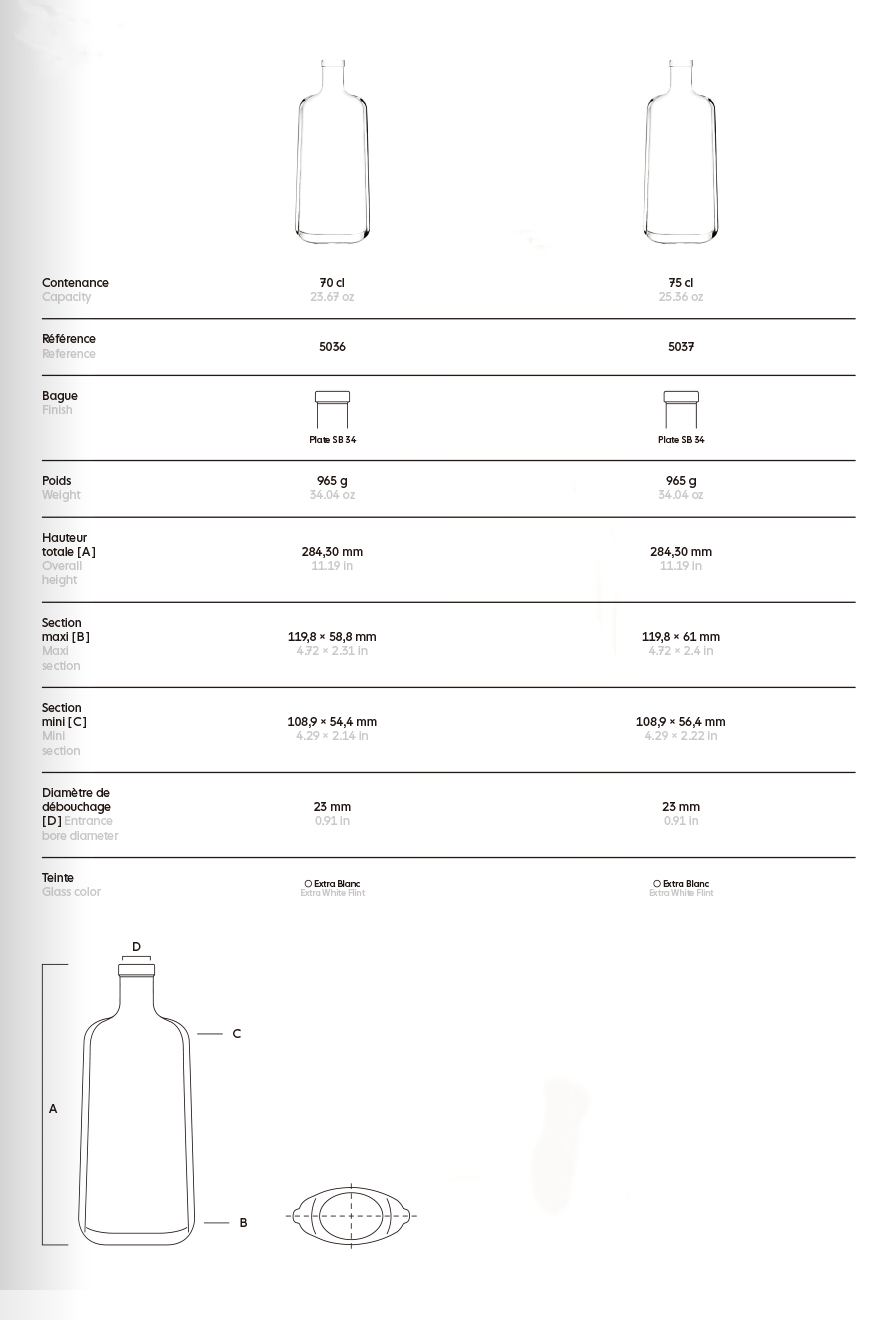
When designing for international markets, you must account for the physical differences between 700ml and 750ml capacities. Some brands utilize a single mold design and adjust the internal glass distribution (the push-up or punt) to alter the internal volume while maintaining the exact same external silhouette. This allows the use of identical secondary packaging and shipping cartons across different global markets.
Moving from 3D CAD models to sample glass molds takes time. The prototyping timeline involves 3D printed resin prototypes and acrylic models before final approval. Mapping out the 12-to-24-week journey from mold approval to final delivery ensures your launch dates remain realistic.
Negotiating minimum run sizes with glass manufacturers dictates your cash flow. You must plan warehouse space for bulk inventory, as custom runs require taking possession of large quantities at once. Understanding your manufacturer's production schedule is critical; glass furnaces run continuously, and missing your production slot can delay your order by months.
Establishing contractual defect tolerances with the glass manufacturer protects your investment. Acceptable Quality Limits (AQL) define the threshold for rejected units. You must identify critical flaws such as seeds, blisters, uneven glass distribution, and checking. Implementing third-party quality assurance checks before containers are loaded for freight prevents unusable inventory from reaching your facility.
Common glass defects to monitor during production runs include:
Seeds and Blisters: Trapped air bubbles within the glass wall that compromise structural integrity.
Checking: Micro-fractures, typically around the neck finish or base, which can cause the bottle to shatter during closure insertion.
Uneven Distribution: Thin spots in the glass wall caused by improper gob temperature or mold cooling, leading to weak points.
Bird Swings: Strings of glass stretching across the inside of the bottle, which are critical safety hazards.
Owning your mold IP allows manufacturing portability across different glass plants. Dual-sourcing strategies protect your brand from regional manufacturing shutdowns. Optimizing bottle dimensions for pallet configuration and shipping density controls landed costs. Efficient packing reduces the amount of shipped air, directly improving your bottom line.
Work closely with your logistics team to design a bottle that maximizes the number of units per pallet. A bottle that is slightly too tall or too wide might force you to drop an entire tier from a pallet, drastically increasing your freight cost per unit. Engineering the bottle dimensions to fit standard pallet footprints is a highly effective way to protect your operational margins.
Audit your current bottling line specifications to understand your exact dimensional constraints before starting the design process.
Request technical CAD drawings from prospective design agencies to move beyond theoretical concepts into manufacturable reality.
Secure preliminary tooling quotes from vetted glass manufacturers to accurately forecast your initial capital requirements.
Plan your inventory buffers based on a 24-month production run rate to absorb inevitable supply chain fluctuations.
A: MOQs for custom glass typically start between 10,000 and 20,000 units per run, depending on the manufacturer and the complexity of the mold. Highly specialized designs or super flint glass may require higher minimums to justify the production setup.
A: Custom tooling requires significant upfront capital depending on mold complexity. This investment covers the creation of sample molds for prototyping and the final production molds used on the automated glass line.
A: Standard flint offers excellent clarity suitable for most spirits. Super flint undergoes a more refined manufacturing process to remove iron impurities, resulting in ultra-clear glass that maximizes the brilliance of premium unaged spirits.
A: The entire process typically spans 16 to 24 weeks. This includes 4 to 6 weeks for design and prototyping, 4 weeks for sample mold creation, and 8 to 12 weeks for full production and ocean freight.
A: You must design a perfectly cylindrical or flat label panel area. Compound curves or extreme tapers will cause paper labels to wrinkle during automated application. Always test 3D-printed prototypes on your specific labeling equipment.
A: Heavy-bottom glass significantly increases the per-unit weight of your packaging. This reduces the total number of bottles you can fit on a shipping container due to weight restrictions, directly increasing your landed freight costs per bottle.


