
 English


Views: 0 Author: Site Editor Publish Time: 2026-07-04 Origin: Site


In a highly saturated spirits market, physical packaging acts as the sole differentiator during split-second consumer decisions at the retail shelf or back bar. Distilleries frequently invest heavily in the distillation process but fail to capture premium or ultra-premium margins due to misaligned, commoditized, or technically flawed packaging. Selecting the right glass packaging requires balancing aesthetic brand positioning with technical realities. You must account for product integrity, UV protection, supply chain scalability, and filling-line compatibility. A poorly chosen vessel ruins the liquid's perceived value before the cork is even pulled. We see brands struggle when they treat the bottle as an afterthought rather than a core component of the product experience. Getting this right means aligning the physical weight, clarity, and silhouette with the exact expectations of your target demographic. The glass must perform flawlessly on the bottling line while commanding attention in a crowded retail environment.
Perceived Value is Tactile: The weight, clarity, and silhouette of a glass bottle directly influence consumer taste expectations and willingness to pay premium price points.
Product Integrity is Paramount: Glass remains the industry standard due to its absolute impermeability, preventing oxidation and flavor degradation over time.
Custom vs. Standardized Trade-offs: While custom molds offer ultimate brand exclusivity, utilizing high-quality stock options like a 500ml long neck bottle can mitigate supply chain risks and lower upfront capital expenditure.
Defining what makes a bottle premium requires looking at the physical interaction between the user and the vessel. Distributors, bartenders, and end consumers all evaluate packaging through different lenses. A bartender needs speed and grip. A distributor looks for shelf stability and case weight. The consumer seeks a tactile experience that validates their purchase. When you hand someone a heavy, well-crafted bottle, their brain immediately registers quality. This physical feedback loop dictates how they perceive the liquid inside before they even take a sip.
Glass weight serves as a primary indicator of luxury in the spirits sector. A heavy base, often referred to as a thick punt, physically grounds the bottle. It adds substantial mass without increasing the internal volume. When a consumer picks up a heavy bottle, they subconsciously associate that physical weight with craftsmanship and superior distillation methods. Lighter glass feels fragile and cheap, which immediately downgrades the perceived quality of the spirit.
The silhouette of the bottle also drives flavor expectations. Sensory science shows that humans link visual shapes to taste profiles. Sharp, angular bottle designs often suggest a crisp, highly filtered, and clean flavor profile. Rounded, smooth contours imply a softer, more viscous mouthfeel. You can use these visual cues to prime the consumer's palate. A well-executed design acts as a silent salesperson on the shelf. It grabs attention, communicates the brand identity, and pushes the buyer toward that critical first purchase.
Upgrading to high-flint or extra-flint glass formulations changes the entire visual dynamic of the product. Standard glass often carries a slight green or blue tint due to iron impurities in the silica sand. High-flint glass undergoes a more rigorous refining process to remove these impurities, resulting in crystal-clear transparency. This absolute clarity allows the purity of the liquid to shine through, which is especially important for unaged spirits. The visual brilliance of high-flint glass provides a tangible reason for consumers to accept a higher retail margin.
Beyond clarity, surface texture disrupts the standard visual evaluation. Most bottles on a shelf are smooth. Adding physical texture forces the consumer to engage with the packaging on a tactile level. You can achieve this through several methods:
Embossing the brand logo directly into the glass mold to create raised lettering.
Debossing specific patterns to create recessed areas that catch the light.
Applying an acid-etched frosted finish to give the glass a matte, ice-cold appearance.
Using textured paper labels with high-build varnish to contrast against the smooth glass.
These tactile elements communicate heritage and exclusivity. When a bartender reaches for a textured Vodka Bottle, the physical grip reinforces the brand identity. It commands prominence on the back bar and signals to patrons that the establishment pours quality spirits.
You cannot evaluate glass solely as a marketing canvas. It operates as a highly engineered protective barrier and a mechanical component on the production line. If the glass fails technically, the marketing becomes irrelevant. You must assess the material's chemical properties, its structural integrity, and its ability to shield the liquid from environmental degradation.
Glass dominates the spirits industry because of its chemical inertness. Unlike plastics or certain metals, glass does not react with high-proof alcohol. It will not leach plasticizers, synthetic chemicals, or metallic off-flavors into the liquid. The flavor profile you achieve in the distillation and filtration process remains exactly the same when the consumer opens the bottle years later. This absolute stability is non-negotiable for premium spirits.
Furthermore, glass provides an absolute barrier against oxygen transmission. Oxygen is the enemy of flavor stability. Even minor oxidation can flatten the bright, crisp notes of a well-distilled spirit. The impermeable nature of the glass matrix ensures zero oxygen ingress through the bottle walls. As long as the closure system functions correctly, the liquid remains perfectly preserved, guaranteeing an indefinite shelf life without flavor degradation.
The traditional aesthetic for unaged spirits relies heavily on clear or frosted glass. Clear glass communicates absolute purity. It shows the consumer exactly what they are buying: a clean, highly filtered, flawless liquid. Frosted glass takes this a step further by simulating the look of a bottle pulled straight from the freezer. It visually reinforces the ideal serving temperature and suggests a smooth, chilled drinking experience.
However, we are seeing a strong shift toward dark, opaque, and deep black glass tones. This trend serves both functional and branding purposes. Functionally, dark glass blocks ultraviolet light. UV exposure can cause chemical reactions in certain flavor compounds, leading to subtle shifts in taste over time. While unaged spirits are less susceptible to UV damage than aged brown spirits, prolonged exposure under harsh retail lighting can still cause degradation.
Dark glass chemistry, achieved by adding specific metallic oxides to the glass melt, provides a technical defense against this UV oxidation. From a branding perspective, opaque black glass conveys mystery, luxury, and ultra-premium exclusivity. It breaks the visual monotony of clear bottles on the shelf and forces the consumer to focus on the label design and the physical shape of the vessel.
Glass Type | Visual Perception | UV Protection Level | Best Use Case |
|---|---|---|---|
Standard Flint | Basic clarity, slight tint | Low | High-volume, entry-level spirits |
Extra Flint | Crystal clear, brilliant | Low | Premium unaged spirits showcasing purity |
Frosted/Acid Etched | Matte, ice-cold appearance | Medium | Brands emphasizing a chilled, smooth serve |
Opaque Black | Mysterious, luxurious | High | Ultra-premium limited releases |
Deciding between an off-the-shelf standard geometry and a proprietary custom mold dictates your production timeline and capital allocation. Both paths offer distinct advantages depending on your production volume and market strategy. You must weigh the desire for absolute brand differentiation against the realities of manufacturing lead times and minimum order quantities.
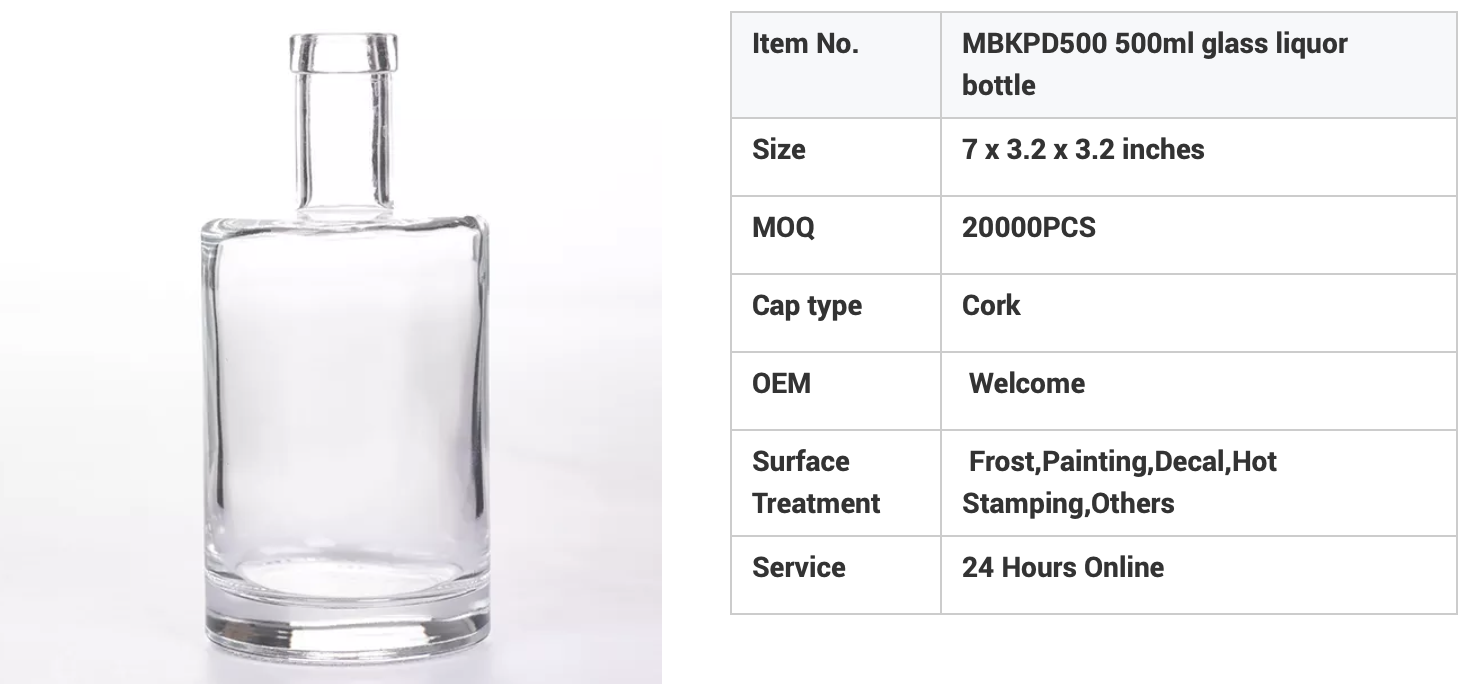
Standardized formats provide a strategic middle ground. They offer proven structural integrity and immediate availability. The 500ml Vodka Whiskey Long Neck Glass Liquor Bottle stands out as a highly versatile option for premium brands. It balances material efficiency with strong design authority. The 500ml capacity hits a sweet spot for premium positioning, allowing brands to maintain accessible retail points while offering a high-end product.
Ergonomics play a massive role in the success of this specific shape. Bartenders require bottles that facilitate speed and accuracy. The long neck design provides a secure, comfortable grip for one-handed pouring. It allows for precise control over the flow rate, which is critical during high-volume service. The extended neck also accommodates standard speed pourers perfectly, ensuring a tight seal without wobbling. Furthermore, the overall height of the long neck profile maximizes vertical presence on the retail shelf, making the brand appear taller and more prominent than squat, wider bottles.
This classic silhouette also accommodates a wide variety of labeling techniques. You are not restricted to simple paper labels. The straight cylindrical body allows for high-speed automated labeling without wrinkling. It provides an excellent canvas for direct-to-glass screen printing, metallic foiling, and tactile paper embossing. You can take a stock shape and make it look entirely bespoke through aggressive, high-end decoration.
Developing a custom glass mold gives you complete control over the physical brand identity. You can dictate the exact punt depth, shoulder angle, and neck profile. However, this route requires significant upfront capital for the steel molds. It also locks you into much higher minimum order quantities. Glass plants will not run a custom mold for a few thousand units; they require massive production runs to justify the setup time.
Relying on custom tooling also introduces supply chain volatility. If the glass plant experiences a shutdown or a shipping delay, you cannot simply buy the same bottle from another supplier. Your entire production line stops. Leveraging high-quality stock options mitigates this risk. Standard shapes are produced continuously by multiple facilities, ensuring a steady, reliable supply of packaging materials regardless of global shipping disruptions.
A beautiful bottle is useless if it shatters on the filling line or leaks during transit. You must evaluate the physical dimensions of your chosen vodka glass bottle against the mechanical constraints of your production facility. Every machine on the line has specific tolerances.
Filling line compatibility requires exact dimensional consistency. The bottle's base diameter must fit the star wheels and conveyor guides. The overall height must clear the filling nozzles. The neck opening (bore diameter) must accommodate the fill tubes without causing foaming or overflow. Even minor variations in glass thickness can cause the bottles to jam in the automated labeling machines, leading to hours of costly downtime.
Closure compatibility is equally critical. You must design the neck finish to match your chosen sealing method perfectly. If you use a T-cork, the internal bore must be perfectly cylindrical and smooth to ensure a tight friction fit. Any ovality in the neck will cause the cork to sit loosely, leading to evaporation and leakage. If you opt for a screw cap or a Guala non-refillable closure, the external glass threads must be molded with absolute precision to prevent cross-threading and tampering.
Transit durability demands careful attention to secondary packaging. Glass is heavy and fragile. You must assess the distribution patterns and design corrugated shippers that isolate the bottles from impact. The internal dividers must prevent glass-on-glass contact during long-haul transport. A heavy base lowers the center of gravity, making the bottle more stable on the conveyor belt and less prone to tipping during transit.
The glass manufacturing sector is evolving rapidly to meet new environmental and technological demands. Brands that adapt to these changes will secure a competitive advantage in the coming years. Sustainability and digital integration are driving the next wave of packaging innovation.
The integration of high-quality Post-Consumer Recycled (PCR) glass is becoming a standard requirement rather than a niche option. Historically, adding high percentages of recycled cullet resulted in a green or grey tint, ruining the premium extra-flint aesthetic. Advanced sorting and refining technologies now allow manufacturers to incorporate significant PCR content without sacrificing ultra-clear transparency. This enables brands to offer sustainable luxury, appealing to environmentally conscious consumers while maintaining a flawless visual presentation.
Lightweighting is another major focus. Manufacturers are engineering new mold shapes and utilizing advanced glass distribution techniques to reduce the overall weight of the bottle. The goal is to thin out the side walls to lower shipping emissions and material usage while maintaining the thick, heavy base that consumers associate with luxury. This structural optimization requires precise thermal control during the molding process to ensure the lighter walls retain their impact resistance.
Interactive and smart packaging bridges the gap between the physical vessel and the digital world. We are seeing a rapid increase in the use of NFC (Near Field Communication) tags and high-density QR codes embedded directly into the label or the glass structure itself. These technologies allow consumers to tap their phones against the bottle to access digital brand storytelling, cocktail recipes, and distillery tours. More importantly, they provide robust anti-counterfeiting tracking, ensuring the product's authenticity from the bottling line to the consumer's glass.
The glass vessel serves as the physical manifestation of your liquid's quality. It is the first point of contact with the consumer and the final barrier protecting your product. Treat the packaging selection process with the same rigor you apply to your distillation cuts. A strategic approach to glass sourcing prevents production bottlenecks, reduces transit failures, and elevates the brand's perceived value in a crowded market.
Execute the following steps to finalize your packaging strategy:
Audit your current filling line machinery to determine the exact maximum and minimum dimensional tolerances for bottle height and base diameter.
Order physical samples of both stock and custom glass options to test the ergonomic grip and pour speed with your bartending partners.
Conduct a closure compatibility test by sealing filled bottles and storing them horizontally for 30 days to check for micro-leaks.
Calculate the exact pallet configuration and loaded case weight to ensure your secondary packaging can withstand long-haul freight vibrations.
A: A heavier glass base creates a tactile perception of quality and luxury. When consumers feel substantial mass, they subconsciously associate it with superior craftsmanship, which directly influences their willingness to pay a higher retail margin.
A: Yes. Sensory science indicates that visual shapes prime the palate. Sharp, angular lines often suggest a crisp, highly filtered flavor, while rounded, smooth contours imply a softer, more viscous mouthfeel.
A: Dark glass blocks ultraviolet rays, preventing chemical deterioration and flavor shifts caused by light exposure. It also conveys a strong sense of mystery and ultra-premium exclusivity on the retail shelf.
A: It offers excellent ergonomics for bartenders, ensuring a stable grip and fast, accurate pouring. The extended neck also maximizes vertical shelf presence and accommodates various premium labeling techniques.
A: Glass is chemically inert and completely impermeable to oxygen. It will not leach synthetic chemicals into the liquid and prevents oxidation, ensuring the flavor profile remains exactly as distilled.
A: Yes. Advanced sorting and refining technologies now allow manufacturers to use high percentages of Post-Consumer Recycled glass without introducing the green or grey tints historically associated with recycled cullet.


