
 English


Views: 0 Author: Site Editor Publish Time: 2026-07-06 Origin: Site


In a hyper-saturated clear spirits market, the physical packaging often serves as the sole differentiator at the point of purchase, making glass selection a primary revenue driver rather than a simple containment necessity. Brand managers and procurement directors face the ongoing challenge of balancing the demand for premium, trend-forward aesthetics with harsh manufacturing realities. These realities include tooling limits, minimum order quantities, bottling line compatibility, and supply chain volatility. Selecting the right vodka glass bottle requires a highly strategic approach that aligns visual identity with strict operational constraints. This guide deconstructs current design trends and evaluates the technical trade-offs between custom and stock manufacturing. We provide a framework for sourcing packaging that aligns with both brand positioning and the physical limits of high-speed filling environments.
Material Clarity Dictates Perception: Upgrading to "Super Flint" glass offers the highest refractive index for clear spirits, directly correlating with premium price positioning.
Tooling vs. Unit Cost Trade-offs: Custom molds require high upfront capital and extended lead times, whereas strategically decorated stock bottles mitigate risk while preserving margins.
Cross-Category Efficiency: Utilizing a unified 750ml embossed glass bottle rum vodka branding strategy allows distilleries to amortize custom mold costs across multiple spirit lines.
Operational Compatibility is Non-Negotiable: Bottle geometry must be evaluated against existing filling line constraints, labeling machinery limits, speed-pourer standards, and transit durability requirements.
Defining what makes a package successful goes far beyond simple aesthetics. A truly effective container must perform across multiple physical environments. You have to consider the shelf footprint in retail environments where space is heavily restricted. Retailers allocate limited space for new spirits, and if your design is too wide, it loses valuable facings. Structural integrity matters during transit and on the bottling line. Pour ergonomics dictate success in on-premise accounts. Bartenders need to handle the product quickly and safely during peak service hours. A beautiful design fails immediately if it shatters easily on the bar mat or pours poorly during service.
We evaluate success based on specific dimensional tolerances and physical performance metrics. The glass must withstand the vertical load pressure of stacking in warehouses. It must survive the thermal shock of moving from cold storage to room temperature environments. The center of gravity must be low enough to prevent tipping on high-speed conveyor belts. When you design a package, you are engineering a functional tool for the hospitality industry.
There is a strong trend of using heavy glass bases to signal luxury. Deep punts and thick glass distribution create a premium feel in the hand. Consumers often associate physical weight with higher quality liquid inside. However, this approach presents distinct logistical challenges. Heavy glass increases freight costs significantly and raises sustainability concerns among modern consumers. Brands must weigh the visual impact against these logistical burdens.
Smart design can create the illusion of weight without the added mass. You can use specific base geometries, such as a chamfered heel or an aggressive taper, to maximize visual heft while minimizing actual glass usage. Pushing the glass distribution toward the base during the blow-and-blow manufacturing process creates a thick bottom without increasing the overall gob weight. This keeps shipping weights manageable while delivering the tactile experience consumers expect from a premium spirit.
Vodka relies heavily on the perception of purity. Minor impurities or color tints in standard glass negatively impact this perception. Consumers expect a crystal-clear liquid. If the glass has a green or blue tint from iron oxide impurities in the silica sand, the spirit looks flawed. High-transparency glass showcases clean distillation narratives and allows the liquid to shine without visual interference.
Upgrading your glass quality directly influences how consumers judge the spirit. Clear glass acts as a subconscious indicator of a refined, highly filtered product. Achieving this requires specifying glass with low iron content and precise decolorizing agents like erbium or cobalt during the melting process. The resulting material provides maximum light transmission, making the liquid appear brilliant under retail lighting.
Designing for the bartender is mandatory for on-premise success. Grip diameter must accommodate average hand sizes comfortably, typically falling between 75mm and 85mm. Balance is essential for rapid, repeated pouring. Wet-hand slip resistance prevents costly accidents behind the bar. Height compatibility matters for standard backbar shelves and speed rails. If a container is too tall, it gets relegated to the bottom shelf, out of the consumer's line of sight.
Furthermore, compatibility with standard 28mm speed-pourers is non-negotiable. If a standard pour spout does not fit securely in the neck bore, you lose house-pour status immediately. Bartenders will simply choose a more functional alternative. The internal bore profile must be strictly controlled during the forming process to ensure a tight seal with the pourer's rubber fins.
The industry is shifting away from overly complex shapes. Clean, cylindrical, or sharp-shouldered designs are dominating the market. These architectural silhouettes offer distinct advantages on the production line. They maximize label real estate for brand storytelling and reduce manufacturing defects. Complex molds often suffer from uneven glass distribution, leading to weak points and higher breakage rates during the annealing process.
Minimalist designs convey modern sophistication. They allow typography and secondary finishes to take center stage. A sleek Vodka Bottle stands out through understated elegance rather than loud, complicated structures. Straight walls also ensure smooth passage through labeling machines, preventing the wrinkles and bubbles that plague tapered or faceted designs.
Distilleries are finding clever ways to optimize their packaging investments. Many leverage a single proprietary embossed mold across multiple spirit categories. This approach helps achieve significant volume discounts at the glass plant. A unified 750ml Embossed Glass Bottle Rum Vodka Branding strategy is highly effective for maximizing mold usage. You use the same custom glass shape for both rum and vodka.
To differentiate the liquids, you rely on distinct closures and neck bands. Label materials and color schemes provide further distinction. This maintains a cohesive master brand identity while separating the product lines. It is a highly efficient way to build brand recognition across the liquor store while keeping inventory management streamlined.
Adapting a primary design for flavored spirits requires careful planning. You want to distinguish flavors like citrus or vanilla without losing the master brand silhouette. Aesthetic strategies must be scalable across potentially dozens of SKUs. Utilizing transparent windows in frosted glass is a popular technique to show the liquid color. Selective color coating can instantly communicate the flavor profile.
Acid-etched glass patterns add texture and visual interest. These methods differentiate the line extensions clearly. Consumers can easily identify their preferred flavor on the shelf. The core brand identity remains intact and recognizable. Using a standard glass shape and varying the secondary decoration keeps procurement simple and reduces the number of unique glass molds required.
Eco-glass is becoming a viable alternative for forward-thinking brands. This glass uses a higher percentage of cullet, or recycled content, which lowers the melting temperature required in the furnace. Lightweighting techniques reduce the overall amount of glass used per unit. These practices lower carbon footprints and shipping expenses.
However, trade-offs exist. High recycled content can compromise absolute glass clarity, introducing slight color variations. You might lose some of the premium heft associated with thick bases. Brands must decide if their target audience values sustainability over traditional luxury cues. Communicating the eco-friendly choice on the label often mitigates the loss of physical weight.
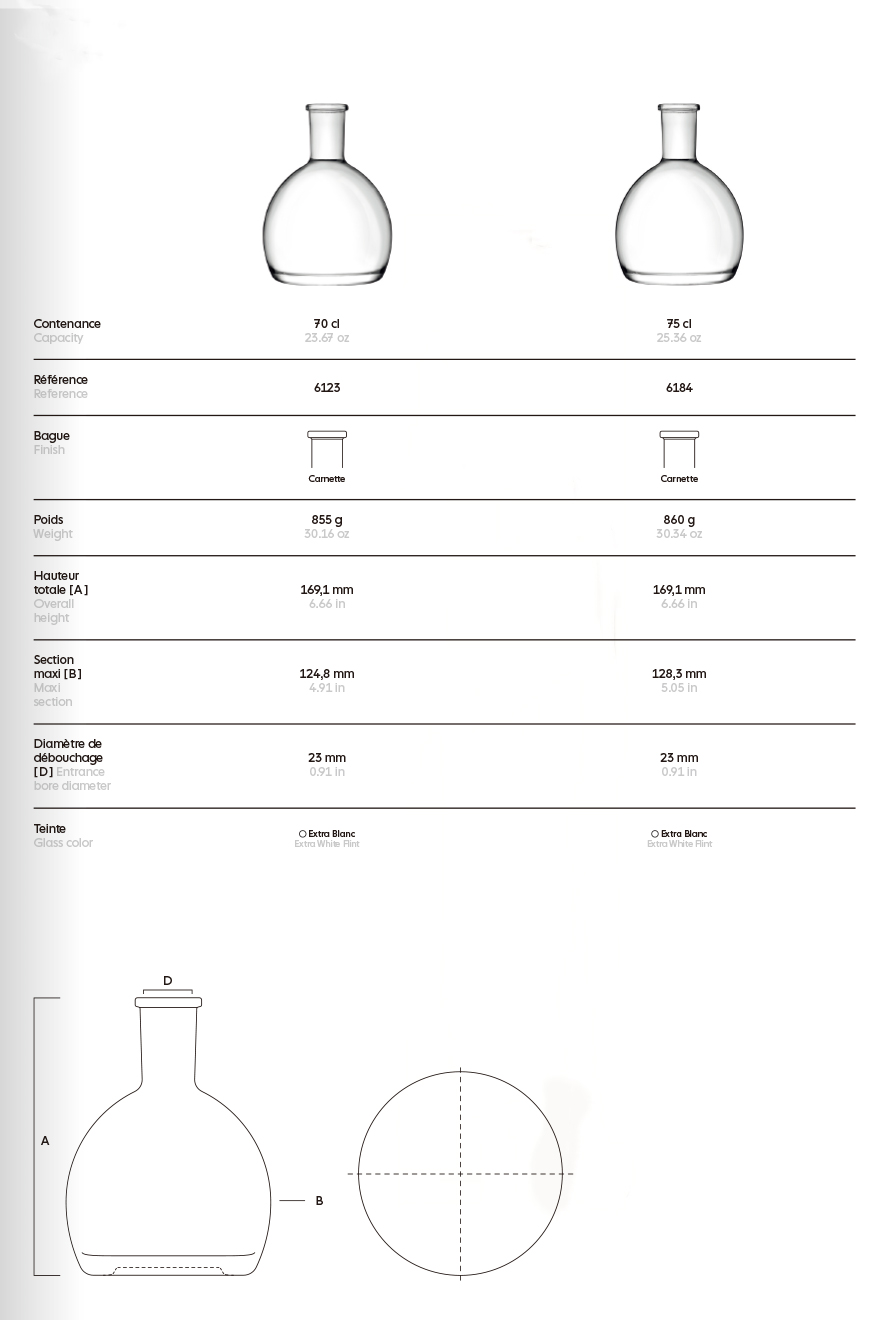
Brands generally choose between three primary sourcing routes. Off-the-shelf stock bottles are readily available and require no mold investment. Customized stock involves using existing shapes but adding private molds for specific details like an embossed logo. Fully bespoke custom molds offer complete creative control over the geometry.
Each approach carries different risk profiles and timelines. Stock options allow for rapid market entry and lower inventory commitments. Custom molds build long-term brand equity but require patience and significant capital. Your choice depends entirely on your launch timeline, available capital, and projected sales volume.
Sourcing Strategy | Lead Time | Upfront Investment | Brand Differentiation |
|---|---|---|---|
Standard Stock | 2 to 4 Weeks | Low | Relies entirely on Labeling |
Customized Stock | 8 to 12 Weeks | Moderate | High (Secondary Finishes/Embossing) |
Fully Custom Mold | 16 to 24 Weeks | High | Maximum (Unique Shape and Profile) |
Financial modeling for custom molds requires careful consideration. Creating a bespoke mold involves significant upfront capital. You must pay for the design, 3D printed prototypes, lucite models, and the physical cast iron or steel molds used on the IS (Individual Section) machine. Standard MOQs for custom runs are often exceptionally high because factories need large runs to justify the downtime required to swap molds on the production line.
In contrast, stock bottles might only require a single pallet minimum. High MOQs impact your cash flow severely and demand substantial warehousing space. You must ensure your sales projections justify the inventory commitment before choosing a custom mold. Sitting on dead inventory ties up capital that could be used for marketing and distribution.
You can achieve a bespoke look on a stock container using secondary processing. Acid etching, often called frosting, provides a premium matte finish that diffuses light beautifully. Ceramic screen printing bakes your design directly into the glass surface through a high-temperature lehr. This eliminates the need for paper labels and offers a tactile experience.
Hot stamping adds luxurious metallic foils to the glass surface, catching the consumer's eye. Custom spray coating can change the entire color of a clear stock unit, allowing for opaque or gradient finishes. These techniques transform generic shapes into proprietary brand assets. They offer a highly effective middle ground between standard stock and fully custom molds.
Understanding glass grades is essential for clear spirits. High Flint is the standard clear glass used in most beverage packaging. It offers good clarity but may have slight color variations depending on the sand source. Super Flint is extra clear, pharmaceutical-grade glass. It boasts the highest refractive index, making the liquid sparkle.
Evaluating the cost delta between these two is critical. Super Flint costs more per unit due to the refined raw materials and strict furnace controls. However, the visual return on investment for premium vodka is often worth the expense. The extreme clarity reinforces the marketing message of a pure, highly distilled spirit.
Verify the iron content in the raw material specification sheet.
Request physical samples of both High Flint and Super Flint to compare light transmission.
Inspect the samples under standard retail fluorescent lighting to check for unwanted color tints.
Confirm the manufacturer's tolerance for seeds (small bubbles) and blisters in the glass wall.
Analyzing standard neck finishes prevents downstream production issues. Common finishes include GPI threads for screw caps, Ropp for aluminum closures, and Bartop for corks. The choice of closure directly impacts the neck design and dictates tamper-evidence requirements. Oxygen transmission rates vary by closure type, though this is less critical for high-proof spirits than it is for wine.
Ensure your chosen closure fits perfectly with the specified neck finish. A mismatch leads to leaks, evaporation, and compromised product integrity. The internal bore diameter must be strictly controlled. If the bore is too wide, a bartop closure will sit loosely and leak during transit. If the bore is too narrow, the cork will bulge or break during insertion on the bottling line.
Geometry must be assessed for stability on high-speed filling lines. Irregular shapes pose significant risks during production. Top-heavy designs are prone to tipping on conveyors, causing line jams and breakage. Unusual contours cause labeling machine misalignment, resulting in crooked labels and wasted materials.
Fill-level optical illusions occur when the neck shape makes a properly filled unit look under-filled. You must order technical drawings and run physical tests using 3D printed models. Verifying compatibility with your specific bottling equipment prevents costly downtime and product loss. Check the distance between the heel and the shoulder to ensure the labeling panels are perfectly flat.
Calculating the comprehensive cost of the packaging involves multiple variables. You must look beyond the simple unit price of the glass. Factor in the expected defect rates from the manufacturer. Inbound freight from the factory to your bottling facility adds significant expense, especially for heavy glass. Packaging waste during the filling process must be accounted for.
A cheaper container that breaks easily on the line ultimately costs more in lost liquid and line downtime. You need a holistic view of all expenses tied to the packaging lifecycle to protect your margins. Consider the cost of applying secondary decorations and the scrap rate associated with those processes.
Mitigating risk during shipping requires proper carton specification. Partition design inside the box prevents units from striking each other during transit. Palletization standards ensure the load remains stable during warehouse handling. Global shipping introduces vibration, temperature shifts, and rough handling.
Domestic distribution adds further stress as pallets are broken down into smaller shipments. Investing in robust corrugated boxes and high-quality dividers reduces breakage rates. Surviving the journey from the factory to the retail shelf is just as important as the glass design itself. Specify the exact board grade and flute type for your master cartons.
Vetting glass manufacturers thoroughly protects your brand. Look for facilities with recognized quality certifications and strict standard operating procedures. Ensure they use automated inspection cameras on the cold end of the lehr. These cameras catch micro-fractures, dimensional errors, and bird-swings before shipping.
Maintaining supply chain resilience is critical in a volatile market. Strategies include dual-sourcing from different geographic regions to mitigate risk. Maintaining backup stock molds protects against unexpected shipping delays or geopolitical issues. A reliable supply chain ensures you never run out of packaging during peak sales seasons.
Request physical glass samples from multiple vendors to test clarity, weight, and finish quality firsthand.
Order technical drawings to verify filling line and labeling machinery compatibility before authorizing production.
Conduct a comprehensive cost analysis that includes freight, closures, and expected defect rates.
Default to high-quality stock bottles with premium secondary finishes for initial product launches.
Reserve fully custom embossed molds for proven, high-volume product lines to minimize financial risk.
A: A standard premium 750ml unit typically weighs between 600 and 800 grams. Ultra-premium brands may push this weight closer to 1,000 grams by utilizing thick glass bases to convey luxury. Brands must balance this perceived value against increased shipping costs and sustainability concerns.
A: High Flint is standard clear glass, suitable for most spirits but may contain slight color tints. Super Flint is pharmaceutical-grade, extra-clear glass. It has a higher refractive index, making it completely colorless. Super Flint is preferred for premium clear spirits to showcase absolute liquid purity.
A: Minimum order quantities for fully custom molds generally start at 20,000 to 30,000 units per production run. Some specialized factories may accept lower runs, but the unit price increases significantly. Stock bottles usually have much lower MOQs, often starting at a single pallet.
A: Yes. Many brands use a unified glass shape across different spirit categories to achieve volume manufacturing discounts. You can differentiate the liquids by using distinct closures, custom neck bands, and unique label designs while maintaining a cohesive master brand identity.
A: The neck finish must be engineered specifically for the chosen closure. A Bartop requires a smooth, straight internal bore. A screw cap requires specific external GPI threads. Selecting the closure first ensures the glass manufacturer molds the correct neck finish to prevent leaks.
A: Bartender-friendly units typically feature a manageable grip diameter of 75mm to 85mm. They should not exceed 12 to 13 inches in height to fit standard speed rails and backbar shelves. They must also have a standard 28mm neck opening to accommodate universal speed-pourers.


