
 English


Views: 0 Author: Site Editor Publish Time: 2026-07-10 Origin: Site


Beverage manufacturers face a high-stakes packaging decision where material choice directly dictates product shelf life, flavor integrity, and consumer brand perception. Brands must balance the logistical weight of packaging against the absolute necessity of preventing oxygen ingress, carbonation loss, and UV-induced flavor degradation. This guide provides a technical evaluation of why glass remains the benchmark for breweries and beverage producers, analyzing material properties, operational logistics, and scalable sourcing strategies for the modern Beer Bottle. We examine the physical mechanics of glass containers on high-speed filling lines, the chemistry of flavor preservation, and the structural requirements for pasteurization. By understanding the exact tolerances and material science behind glass packaging, production managers can optimize their filling operations, reduce line breakage, and ensure the liquid reaches the consumer exactly as the brewer intended.
Chemical Inertness: Glass is a 100% inert material, eliminating the risk of chemical leaching and preserving the exact flavor profile intended by the brewer.
Barrier Protection: Amber and UV-treated glass provide essential defenses against photo-oxidation (skunking) while acting as an absolute barrier to oxygen and CO2 exchange.
Tactile and Sensory Premiumization: Beyond functional barrier protection, glass leverages human psychology through physical weight, clarity, and texture to build brand equity.
Scalability: Standardized formats—such as the 520ml Empty Glass Bottle Beverage Soda Packaging—offer cross-functional utility and supply chain predictability for multi-product beverage lines.
Risk vs. Reward: Operational logistics must weigh the realities of freight weight and line breakage against the premium market positioning and extended shelf life glass provides.
Glass stands apart from alternative packaging materials due to its completely non-reactive nature. Unlike aluminum cans or PET plastics, which require internal polymer linings to prevent the liquid from degrading the container, glass needs no protective coating. This inherent chemical inertness ensures that the beverage rests against a neutral surface from the moment it is filled until it is consumed. When you run a high-volume filling line, you do not want to worry about liner degradation or microscopic pinholes in a spray coating. Glass removes that variable entirely.
Inert materials prevent flavor scalping. This phenomenon occurs when volatile hop compounds, essential oils, and delicate flavor notes are absorbed by plastic liners over extended storage periods. By utilizing glass, breweries guarantee that the complex flavor architecture remains intact, free from chemical contamination or flavor loss. You spend weeks fermenting and conditioning a batch; losing the dry-hop aroma to a polymer liner is an unacceptable operational failure. Glass maintains the exact terpene profile and ester balance you designed.
Consider the long-term storage mechanics. Beverages aged in glass do not pick up metallic off-flavors or plasticizer notes. The silica matrix of the glass is impermeable and stable across a massive range of pH levels. Whether you are packaging a highly acidic sour ale or a heavily roasted stout, the container will not react with the liquid. This stability is why sensory panels consistently use glass for baseline flavor testing.
Maintaining carbonation and preventing oxidation are primary concerns for any carbonated beverage. Glass acts as an absolute barrier to oxygen ingress. This impermeable shield prevents premature oxidation, keeping the beverage from going stale and extending its viable shelf life significantly compared to porous materials. PET bottles, even those with oxygen scavengers, eventually allow gas exchange. Glass does not.
The hermetic seal achieved by crown caps on traditional beer bottles provides exceptional reliability. While aluminum double-seaming processes are highly effective, the rigid neck finish of a glass container ensures a consistent, unyielding surface for the crown to crimp against. If your capper is calibrated correctly, the glass finish will not deform under pressure. Furthermore, glass blocks volatile ambient odors found in transit or warehousing environments, ensuring external contaminants never compromise the liquid inside.
To ensure maximum gas retention on the packaging line, operators must monitor several mechanical factors:
Crown crimp diameter: Must be measured hourly with a go/no-go gauge to ensure the seal is tight but not fracturing the glass finish.
Fill level consistency: Headspace management is critical. Too much headspace introduces excess oxygen; too little causes pressure spikes during pasteurization.
Cap application pressure: The downward force of the crowning head must be dialed in to compress the liner without stressing the bottle neck.
Dissolved oxygen (DO) pickup: Measured in parts per billion (ppb) immediately after crowning to verify the fobbing and capping process is excluding ambient air.
Physical packaging communicates value before the product is ever tasted. The physical weight, clarity, and texture of glass communicate a premium status that lightweight alternatives struggle to match. Consumers inherently associate the heft of a glass container with higher quality and craftsmanship. When a customer picks up a heavy-bottomed glass bottle, the tactile feedback immediately sets an expectation for the liquid inside.
This psychological connection extends to the consumer ritual. The visual clarity of the pour, the distinct acoustics of the cap popping, and the smooth mouthfeel of the glass rim all contribute to a heightened sensory experience. These tactile and auditory cues build strong brand equity and justify premium retail positioning. You cannot replicate the sound of a crown cap being pried off a glass bottle with a pull tab.
Surface treatments and embossing further enhance this tactile experience. Custom molds allow breweries to integrate their logo or specific grip textures directly into the glass. This not only improves handling when the bottle is wet with condensation but also provides a permanent, unpeelable brand identifier that survives ice buckets and coolers.
Light exposure is highly detrimental to hopped beverages. When hop iso-alpha acids are exposed to ultraviolet and blue light, a chemical reaction occurs that produces 3-methyl-2-butene-1-thiol. This compound creates the distinct "skunked" aroma that ruins flavor profiles within minutes of exposure. This is not a gradual staling process; it is an immediate photochemical reaction that can occur just from sitting in a brightly lit retail cooler.
Different glass pigments offer varying levels of UV-blocking efficacy. The choice of glass color is a direct engineering decision based on the hop load of the beverage and the expected retail environment.
Glass Color | UV Protection Level | Wavelengths Blocked | Best Application |
|---|---|---|---|
Amber (Brown) | 99% | Blocks up to 450nm | Hop-forward ales, lagers, long-term storage |
Green | 20% - 30% | Blocks up to 400nm | Traditional European lagers, ciders |
Clear (Flint) | Minimal | Blocks up to 320nm | Malt beverages, sodas, requires modified hops |
Cobalt Blue | Moderate | Blocks up to 400nm | Specialty waters, spirits, unique branding |
Historic and modern breweries utilize specific color pathways to balance brand aesthetics with shelf-life preservation. If you are packaging a hazy IPA loaded with dry hops, amber glass is non-negotiable. If you are running a clear malt beverage or a hard seltzer where light strike is not a chemical risk, flint glass showcases the liquid's clarity and color.
Many commercial beverages undergo tunnel pasteurization to ensure microbiological stability. Glass exhibits excellent thermal stability, withstanding the rapid temperature gradients required during this process. The material absorbs and dissipates heat effectively without warping or compromising the container's structural integrity. When bottles enter the pasteurizer, they are subjected to a series of spray zones that gradually raise the temperature to around 60°C (140°F) and then cool it back down.
The glass must handle the internal pressure expansion of the carbonated liquid as it heats up. A standard glass bottle is engineered to withstand internal pressures exceeding 3 volumes of CO2 at pasteurization temperatures. If the glass distribution is uneven or if there are micro-fractures from line handling, the bottle will burst in the tunnel. This is why annealing—the controlled cooling of glass after forming to relieve internal stress—is a critical quality control metric.
Beyond the pasteurization tunnel, glass maintains internal pressure resistance during cold-chain transport and ambient storage fluctuations. Whether subjected to freezing transit conditions or warm warehouse environments, the rigid structure prevents deformation and maintains the critical seal at the closure. You do not have to worry about the container expanding or losing its shape under pressure.
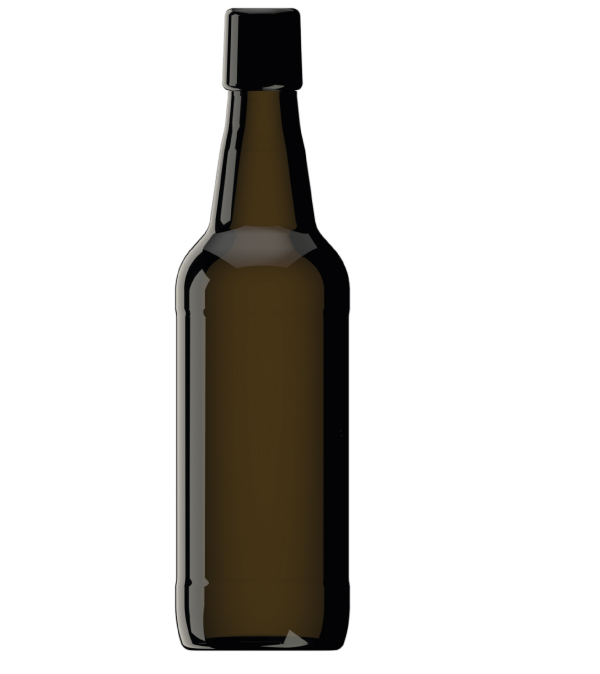
Adopting industry-standard molds yields significant operational flexibility. Utilizing standardized containers allows facilities to run multiple product lines—ranging from craft beer to kombucha and artisanal soda—without changing line tooling. Every time you change bottle shapes, you have to swap out star wheels, adjust guide rails, recalibrate the filler bowl height, and change the labeling application settings. Standardizing your glass eliminates hours of downtime.
Standard capacities improve supply chain predictability. Because these molds are continuously produced by manufacturers, they generally require lower minimum order quantities (MOQs) and feature shorter lead times. This scalability is vital for growing brands that need to pivot quickly in response to market demand. If a specific SKU suddenly spikes in popularity, sourcing standard glass is much faster than waiting for a custom mold run.
Consider the logistical advantages of standardized packaging on the warehouse floor. Standard bottles fit into standard corrugated mother cartons, which stack perfectly on standard pallets. This maximizes cube utilization in shipping containers and dry vans. You are not shipping dead air. The predictability of standard glass dimensions allows for highly optimized warehouse slotting and automated palletizing.
For brands seeking distinct market positioning, proprietary bottle shapes and custom silhouettes offer powerful visual differentiation. Glass embossing, unique neck profiles, and custom base designs create an immediate visual impact on crowded retail shelves. A custom bottle shape can become as recognizable as the logo itself, serving as a silent salesman in the retail cooler.
However, custom tooling requires upfront capital expenditure for mold creation and testing. Brands must outline the conceptual trade-offs between these initial costs and the long-term brand equity generated by a highly recognizable, proprietary package. You also have to factor in the engineering time required to adapt your filling line to the new shape. Custom bottles often require custom handling parts and slower line speeds until the operators dial in the new parameters.
When developing a custom mold, you must work closely with the glass manufacturer's engineering team to ensure the design is actually manufacturable. Sharp corners, extreme tapers, and heavy embossing can create weak points in the glass or cause the bottle to get stuck in the mold. The design must balance aesthetics with the brutal realities of high-speed filling lines and impact resistance.
The primary logistical challenge of glass is its density. The weight of glass impacts shipping payload limits and increases the overall carbon footprint of distribution. When you load a truck with glass bottles, you will almost always weigh out before you cube out. This means you hit the maximum legal weight limit of the trailer before you fill the physical space inside it.
To mitigate these factors, manufacturers are adopting lightweighting technologies, such as the narrow neck press and blow (NNPB) manufacturing process. This technique distributes glass more evenly, reducing container weight while maintaining structural strength. By utilizing NNPB, glass plants can shave grams off the bottle weight, which translates to thousands of pounds saved per truckload. Additionally, localizing supplier networks helps reduce inbound freight distances and associated risks.
Warehouse handling of glass requires specific protocols to prevent damage. Forklift operators must be trained to handle glass pallets smoothly, avoiding hard stops and sharp turns that can cause the load to shift. Pallets must be securely stretch-wrapped and banded, with tier sheets placed between each layer of glass to distribute weight evenly and prevent glass-on-glass abrasion.
High-speed automated filling lines subject containers to significant mechanical stress. Defining acceptable loss margins and breakage tolerances is a critical step in facility management. Excessive breakage causes costly line stoppages, product loss, and requires operators to clean up shattered glass and spilled liquid, killing your overall equipment effectiveness (OEE).
Procurement teams must establish strict quality control metrics. Key parameters include uniform glass thickness distribution, proper annealing quality to remove internal thermal stresses, and rigorous impact resistance testing to ensure containers survive the filling and capping processes. You should regularly pull samples from incoming pallets and run them through a polariscope to check for residual stress.
Line lubrication and accumulation management are vital for reducing breakage. Bottles moving down the conveyor should not be slamming into each other. You need proper line modulation to ensure smooth transitions between the depalletizer, filler, capper, and labeler. Acoustic monitoring systems can be installed on the line to detect the specific sound of breaking glass and automatically halt the conveyor to prevent further damage.
Glass offers a compelling sustainability narrative through its closed-loop recyclability. It is infinitely recyclable without any loss of quality or purity, contrasting sharply with single-use plastics and composite materials that degrade during the recycling process. A glass bottle can be recycled, melted down, and reformed into a new bottle in as little as 30 days. Utilizing cullet (recycled glass) in the manufacturing process also lowers the melting temperature required in the furnace, saving significant energy.
Compliance with international food-contact material regulations is mandatory. Facilities must ensure their glass sourcing meets stringent FDA requirements, particularly concerning heavy metal limits in glass manufacturing and surface treatments, guaranteeing consumer safety across all distribution regions. You must maintain documentation from your glass supplier certifying that their products comply with the Toxics in Packaging Clearinghouse (TPCH) guidelines.
Furthermore, the cold-end coatings applied to glass bottles to prevent scuffing during transport must be food-safe and compatible with your labeling adhesives. If the coating is too heavy, labels will flag or fall off in the ice bucket. If it is too light, the bottles will scuff each other on the line, ruining the premium aesthetic. Managing these technical specifications is essential for a successful packaging operation.
Glass packaging remains the superior choice for beverage brands prioritizing absolute flavor integrity, maximum shelf life, and a premium consumer experience. Its chemical inertness and barrier properties provide unmatched protection for sensitive liquids, ensuring the product reaches the consumer exactly as intended.
Packaging decisions should be dictated by distribution radius, pasteurization requirements, target retail positioning, and brand aesthetics. Balancing the weight of glass against its protective benefits requires a calculated approach to logistics and line management.
To successfully implement or optimize glass packaging in your facility, execute the following steps:
Audit your current filling line capabilities, specifically checking star wheel tolerances and capper head pressure settings for the specific glass finish.
Request sample runs from potential glass suppliers and subject the bottles to thermal shock testing and polariscope analysis.
Calculate your exact payload limits based on the empty weight of the glass to optimize outbound freight routing.
Establish a strict standard operating procedure for line lubrication and accumulation to minimize glass-on-glass impact.
A: Brown, or amber, glass blocks up to 99% of ultraviolet and blue light. This prevents photo-oxidation, a chemical reaction that degrades hop compounds and causes a "skunky" off-flavor, thereby protecting the beverage's intended taste profile.
A: Both materials offer excellent protection, but glass provides an absolute barrier to oxygen without requiring internal polymer linings. When properly sealed with an oxygen-scavenging crown cap, glass prevents oxidation and flavor scalping exceptionally well over long periods.
A: A standard 330ml or 12oz glass bottle typically weighs between 180 and 220 grams. Modern lightweighting manufacturing techniques, such as narrow neck press and blow, have allowed producers to reduce this weight to around 150 grams without sacrificing structural integrity.
A: Yes, provided the glass is manufactured to withstand high internal pressure. Beverage-grade glass is specifically annealed and designed with appropriate wall thickness to safely contain the volumes of CO2 typical in highly carbonated sodas and beers.
A: Glass has a higher thermal mass than aluminum, meaning it takes slightly longer to heat up and cool down in a pasteurization tunnel. Operators must adjust the spray zone temperatures and dwell times to ensure the liquid reaches the required pasteurization units (PUs) without thermal shocking the glass.
A: International glass must comply with FDA regulations regarding food-contact substances. This primarily involves strict limits on leachable heavy metals, such as lead and cadmium, ensuring the container is completely safe for long-term beverage storage.


